Key Takeaways from the 2026 IMF World Bank Spring Meetings
Last week, finance ministers, development leaders, and policymakers gathered in Washington, D.C. for the 2026 IMF World Bank Spring Meetings.
The general tone across the meetings reflected the somber state of affairs: in just six years, the world has faced three major global crises and its fifth food price shock in under two decades. Meanwhile, traditional development actors are stepping back from Agenda 2030.
This convergence of crises is reshaping priorities and exposing gaps. While macroeconomic stability dominated formal discussions, the urgency of transforming food systems and delivering good food for all surfaced repeatedly in corridors, side events, and targeted sessions.
The impacts of the Middle East Conflict are unfolding against a backdrop of tightening fiscal space, rising debt burdens, and declining official development assistance (ODA). Many low-income countries are navigating food insecurity, climate shocks, and economic instability simultaneously, with fewer resources and limited fiscal flexibility.
Barbados Prime Minister, Mia Mottley and UN Deputy Secretary-General, Amina J. Mohammed stressed the urgent need to protect and invest in a multilateral, rules-based system, noting the muted global response to the Middle East conflict compared to previous coordinated efforts.
The calls by these leaders must be taken with urgency. With climate shocks, conflict, and economic instability increasingly overlapping and a potential El Niño looming, the ability to act collectively may determine whether countries can ensure access to food.
Despite this, some progress was made in D.C. towards good food for all, signaling progress in aligning resources to accelerate food systems transformation.

AgriConnect: A Key Opportunity for Smallholder Farmers and Nutrition
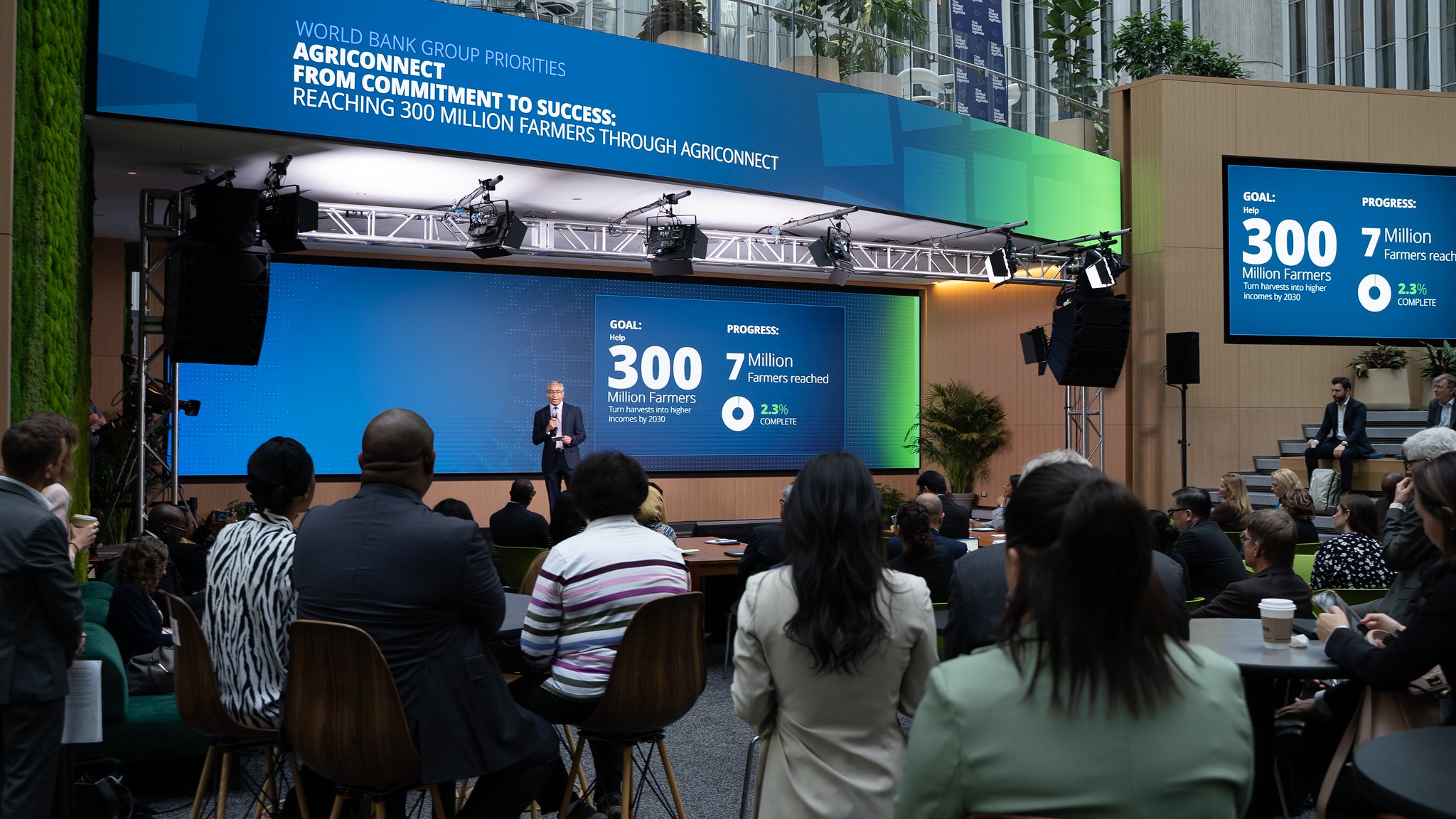
A major highlight from the Springs was the focus on smallholder farmers through AgriConnect, part of the World Bank’s push for job creation. It aims to mobilise financing and leverage digital innovation to strengthen agriculture and reach 300 million farmers by 2030.
As countries start to develop Country Compacts under AgriConnect, advocacy will be crucial to ensure nutrition is integrated throughout. Smallholder farmers must be recognised as key to delivering affordable, sustainable, healthy diets for their communities and regions.
Early wins for health and nutrition financing
The Global Financing Facility (GFF) launched its replenishment cycle with donors pledging $800 million, of which 30 percent will be dedicated directly to nutrition—a vital lifeline for vulnerable populations.
Additionally, the launch of the Water Forward initiative marked a critical step in addressing the water-food nexus, which is fundamental to agricultural resilience and preventing malnutrition.
The crushing weight of debt on Low-Income Countries
Calls to accelerate debt relief and reform financial systems for low-income countries persisted, recognising that without structural change, countries remain trapped in cycles of crisis response with severe fiscal constraints. ACTION?
Shifting the Financial Architecture
To address the fall out from the Middle East conflict, the World Bank will make USD$20–25 billion from its Crisis Response Toolkit available to countries in the coming months. Similarly, the Asian Development Bank has announced a financial support package to address immediate pressures as well as build long-term resilience in its member countries. With declining ODA, discussions shifted towards the urgent need for systemic reform and leveraging other forms of financing, including the private sector and philanthropy. Additionally, reforming Multilateral Development Banks is essential to mobilise resources for sustainable development and coordinated action.
The Road to Bangkok
The 2026 Spring Meetings made it clear that in our shock-prone world, building resilience is essential for survival. To achieve SDG2 and ensure good food for all, we must strengthen collective, multilateral co-operation, reform financial systems, and put smallholder farmers and nutrition at the centre of responses to climate and economic challenges. Fully maximising IDA22 – the World Bank’s concessional lending arm for low-income countries – will be critical to this effort.

From Vision to Action: The Global Alliance Against Hunger and Poverty at One Year
From Vision to Action: The Global Alliance Against Hunger and Poverty at One Year
A Reflection: The G7 Summit and Food and Nutrition Security
Unveiling the Impact: Food and Nutrition at the IDA for Africa Heads of State Summit