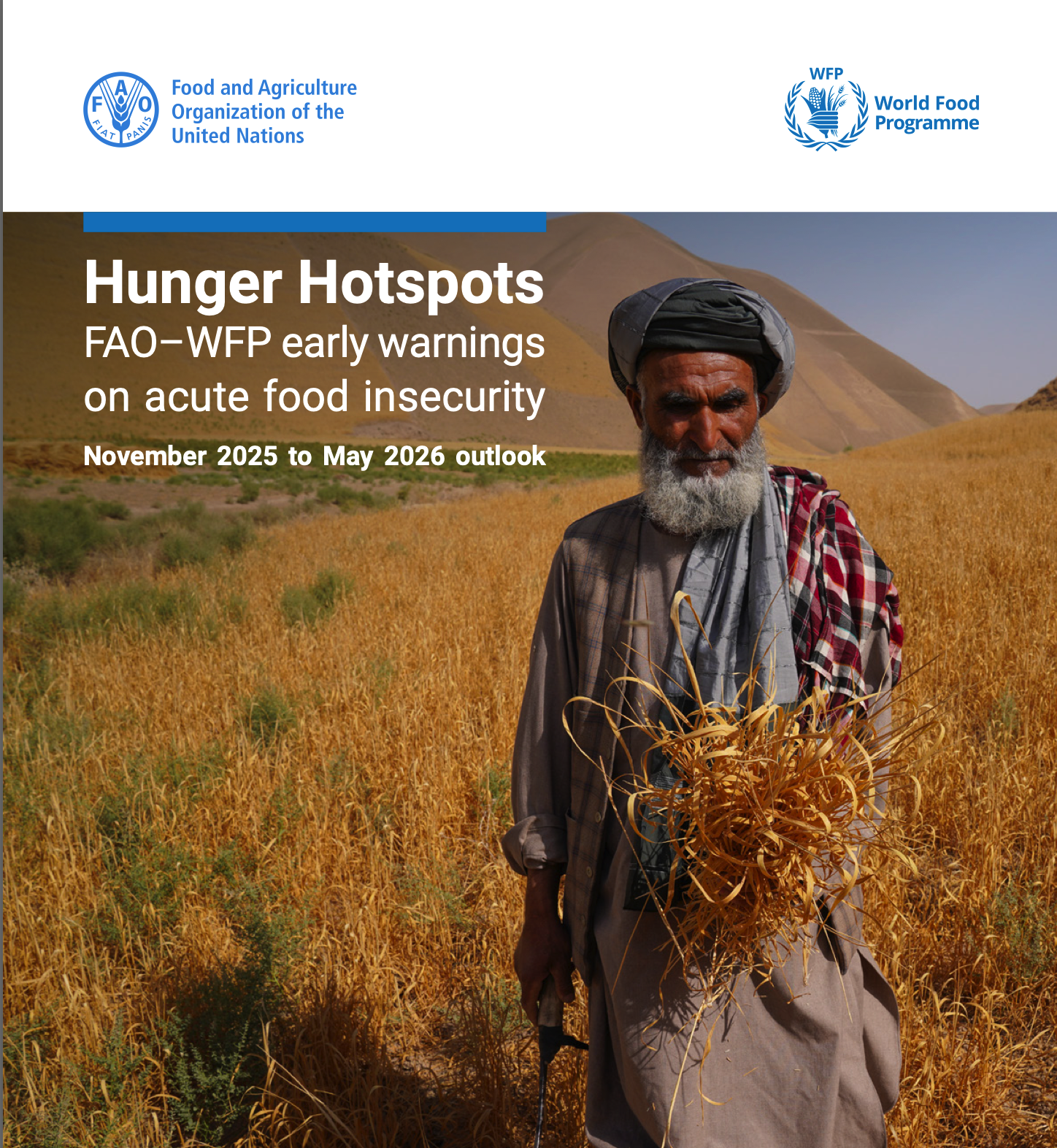
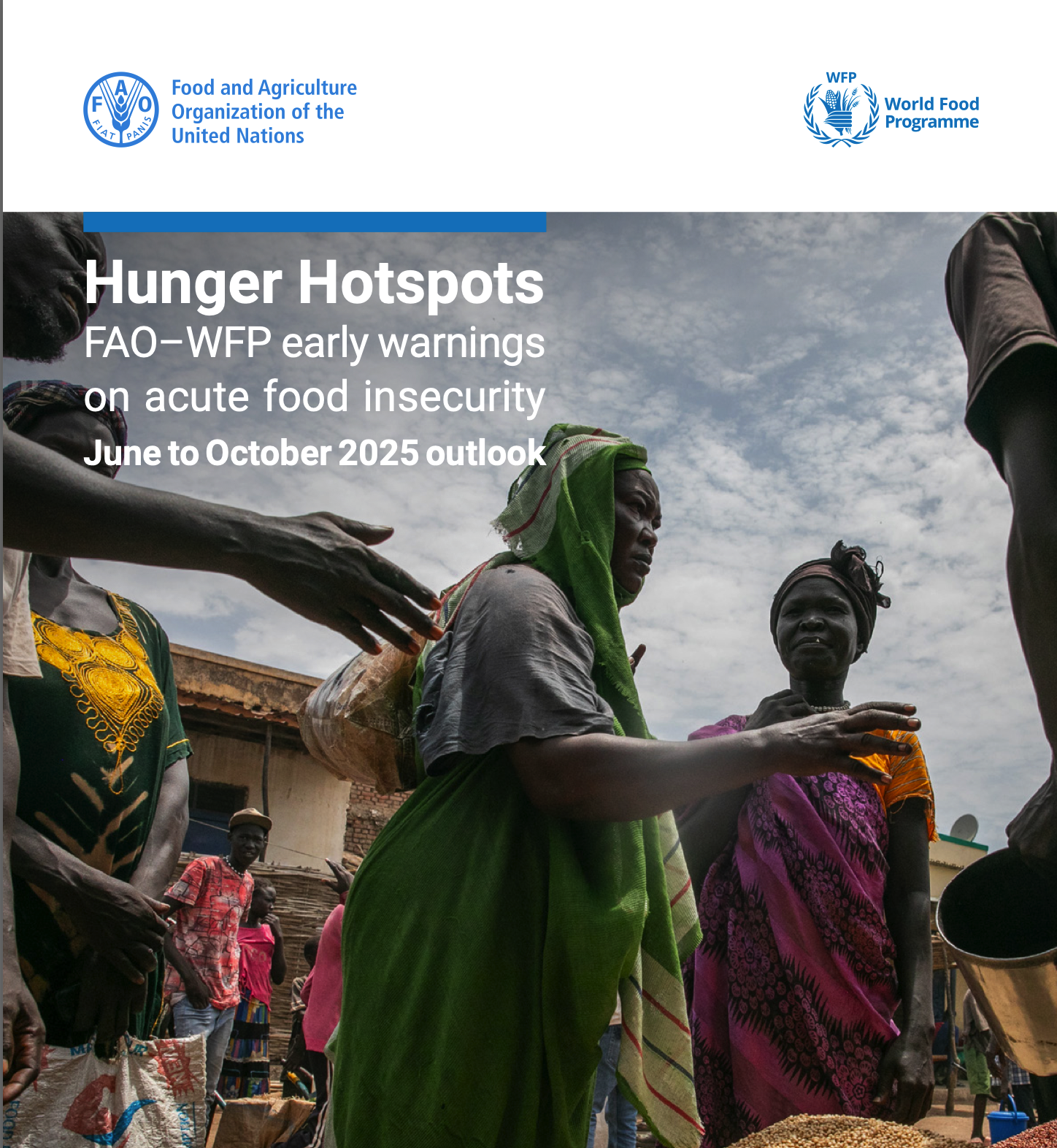
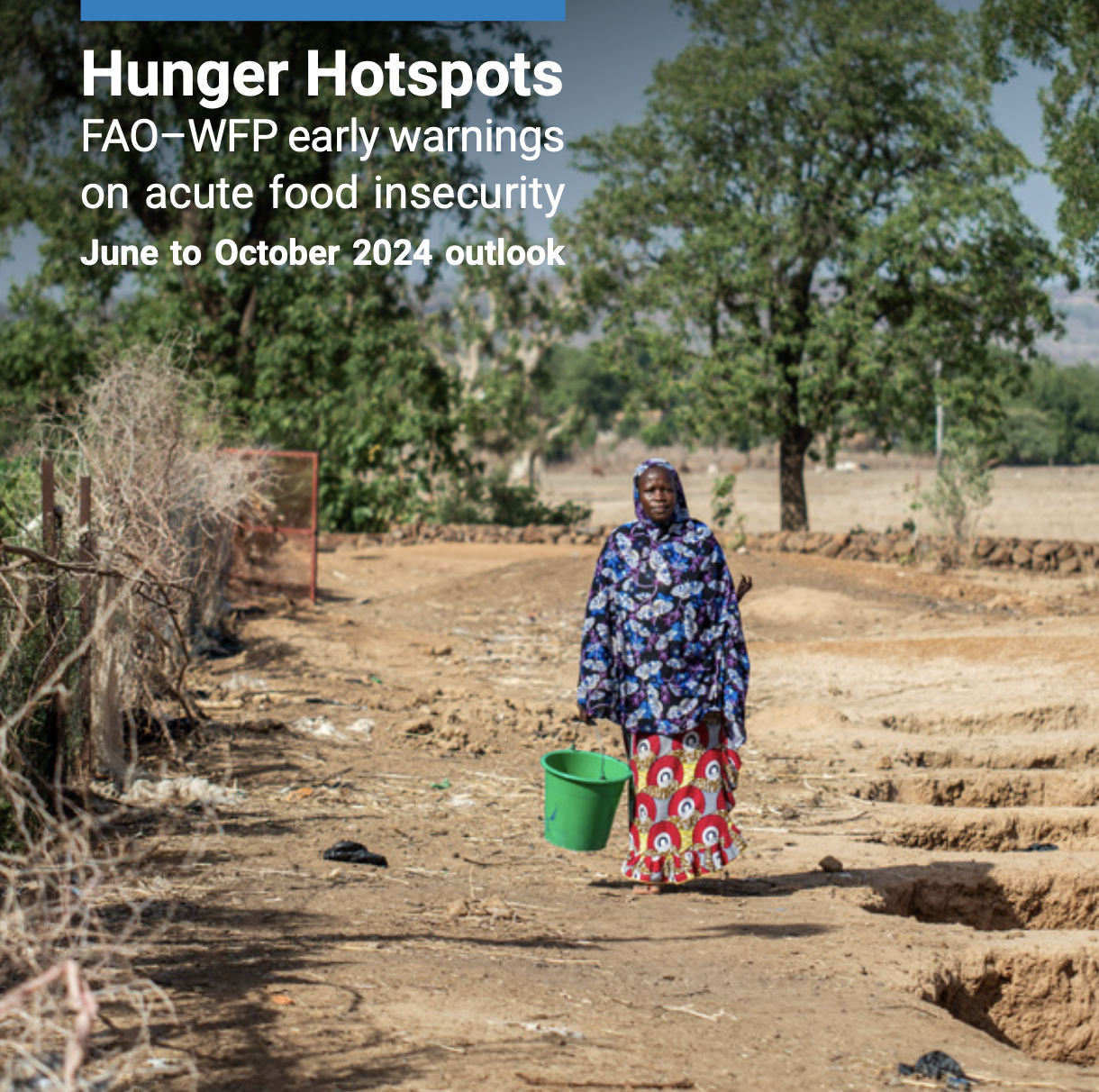
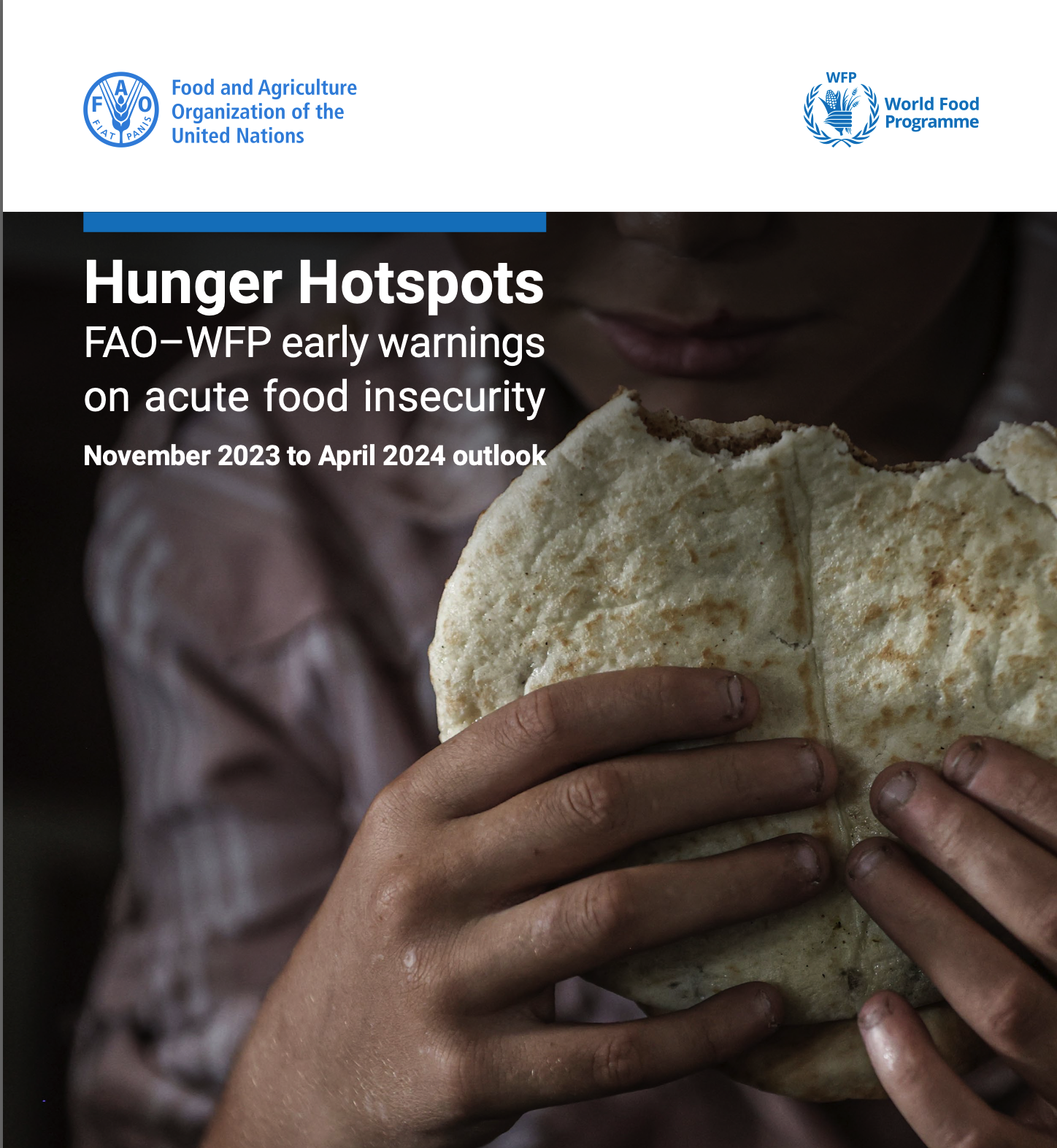
The Hunger Hotspots: FAO/WFP Early Warnings on Acute Food Insecurity report forms part of a series of analytical publications developed under the Global Network Against Food Crises initiative. Its purpose is to strengthen and coordinate the production and sharing of evidence-based information to help prevent and respond to food crises. The latest edition of the report is available below.
New Hunger Hotspots 2025 report
FAO and WFP identify 13 hunger hotspots for June–November 2026 where acute food insecurity is expected to worsen, with Sudan, South Sudan, Yemen and Palestine among the most severe. Others include Mali, Lebanon, the Democratic Republic of Congo, Madagascar, Haiti, Somalia, Myanmar, Afghanistan, Yemen and Nigeria.
Several areas face a real risk of famine, driven primarily by conflict and compounded by economic shocks, disrupted energy and fertiliser markets, and climate extremes.
Over the June–November 2026 outlook period, global climate patterns are expected to change as El Niño establishes and likely intensifies toward year’s end. Forecasts point to a strong event, heightening the risk of widespread climate anomalies and extreme weather.
Humanitarian assistance has fallen sharply even as the need has doubled, leaving millions cut off from life-saving support. Urgent, scaled action is required to protect lives, bolster resilient food systems and secure Good Food for All.