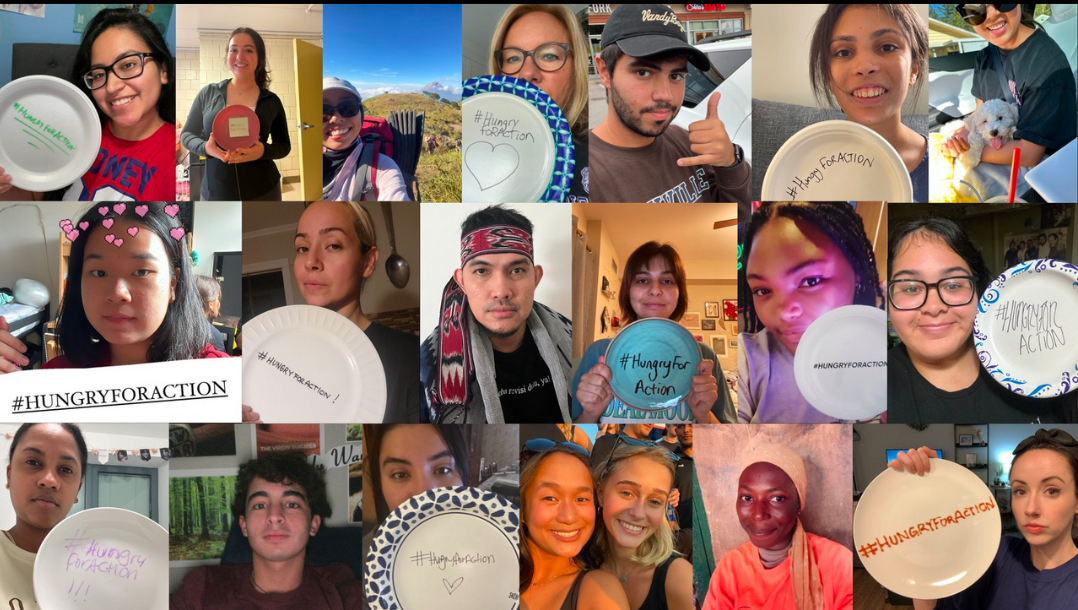
On 16 October (World Food Day) 2025, we are asking people around the world to take part in a simple, powerful act: hold up an empty plate as a demand for action on the global food crisis.
Why empty plates? Every empty plate represents one of the up to 720 million people going to bed hungry every day because of political inaction. This isn’t just a tragedy – it’s a failure of leadership.
Our goal: Flood social media with images and videos of empty plates, tagged with #EmptyPlates and addressed directly to political leaders.
This activation can happen in the build up, on World Food day and for the rest of 2025.
Join us to take action!
How can you support the campaign?
-
Hold up an empty plate — plain, clean, visible. Or include one of the
hashtags or key figures below. -
Post the picture on social media.
-
Tag your own head of state or country leader.
-
Use the hashtags #EmptyPlates, #WorldFoodDay and #HungryforAction.
5. Tag @HungryForAct on X and @hungryforaction on Instagram.
A complete toolkit is available here
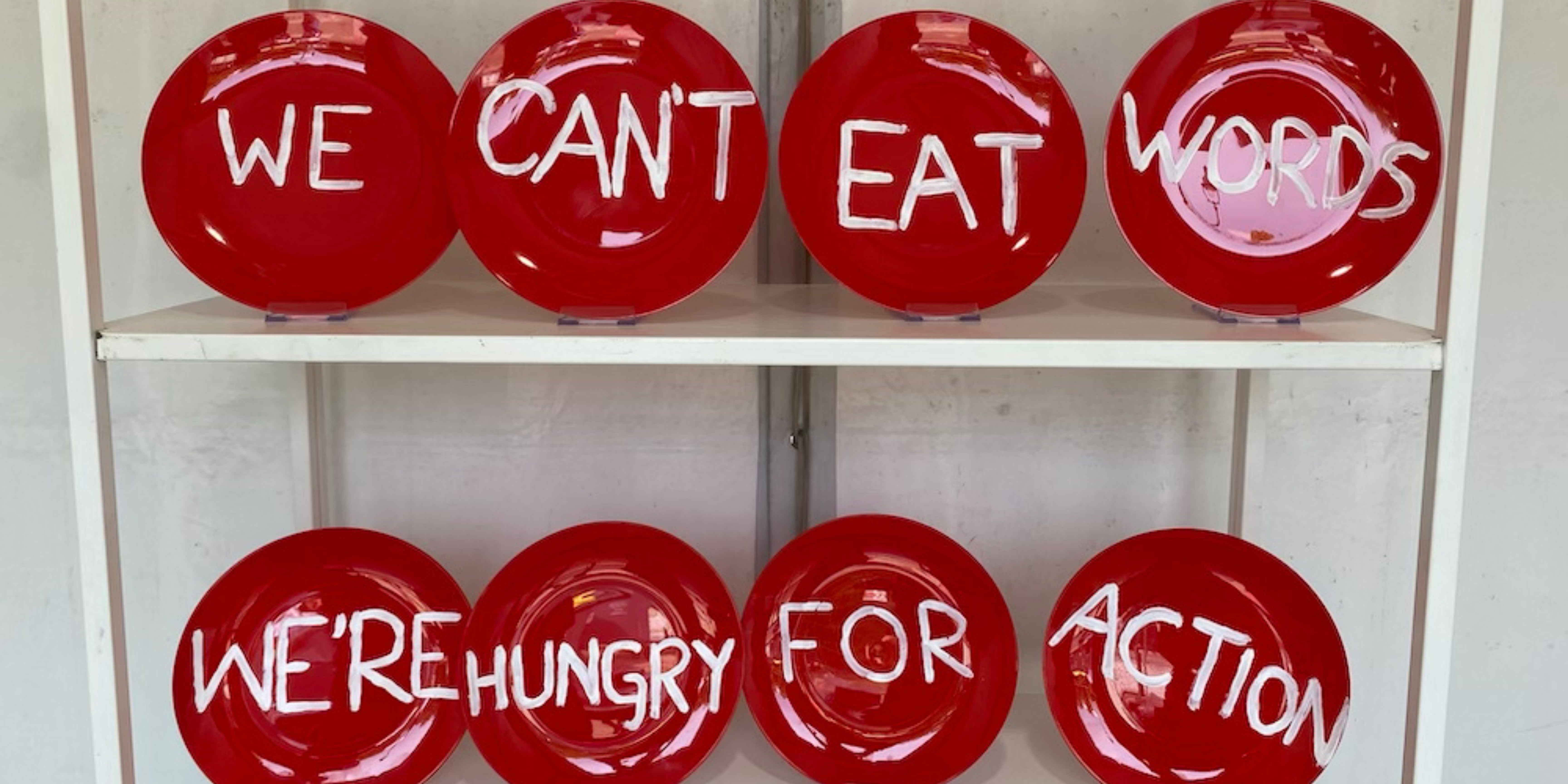
“Do not look the other way; do not hesitate. Recognise that the world is hungry for action, not words. Act with courage and vision.“
Nelson Mandela, Former President and Freedom Fighter, South Africa.
Past powerful events

London, Kings Cross
July, 25
Advocates, chefs, and partners distributed approximately 750 empty plates.
LEARN MORE

Rio de Janeiro, Museum of Tomorrow
Ação da Cidadania and Hungry for Action were at Museu do Amanhã [Museum of Tomorrow] in Praça Mauá where they distributed empty plates.
LEARN MORE
“ No child should starve. Our humanity compels us to feed our children. The reality of child hunger is utterly heart-breaking – and it is getting much worse. Children across the world tell us about the devastating impact of hunger and malnutrition every single day. It makes girls and boys ill, forces them to drop out of school, and robs them of their God-given potential in life. Our global ENOUGH campaign highlights that there is enough food in the world for everyone. So let us unite to achieve zero hunger for every child, everywhere.”
Andrew Morley, President and CEO
World Vision International
“For hunger reduction, six is a powerful number. First, we have 6 years to attain SDG 2 or Zero Hunger. Second, the marginal cost of ending hunger by 2030 is a relatively modest $66 billion over those 6 years. Third, 800 million empty plates, lined up, would reach 6 times around the world, giving us a sense of the scale of suffering.”
Lawrence Haddad, Executive Director
Global Alliance for Improved Nutrition (GAIN)
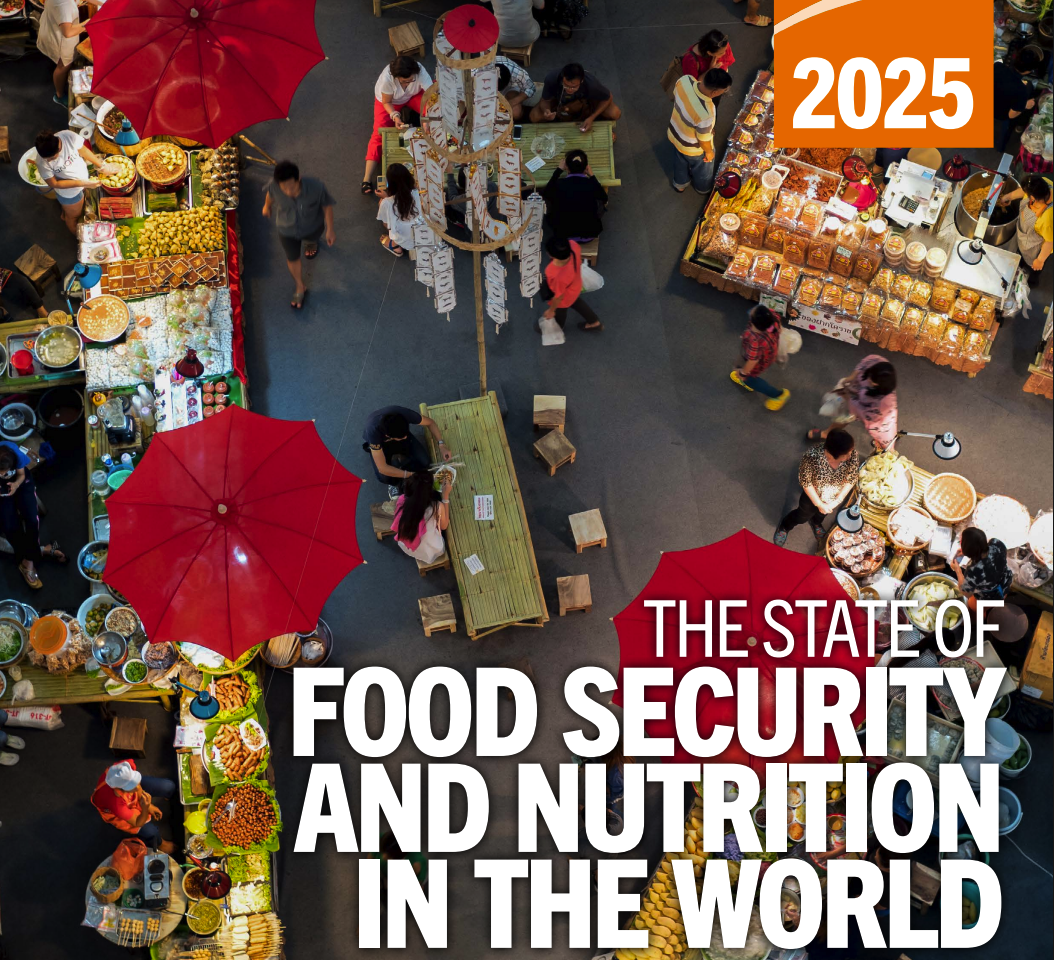
The SOFI Report
Global hunger declined marginally in 2024 while regional and national data shows uneven progress, finds the 2025 State of Food Security and Nutrition in the World (SOFI) report. SOFI is an annual report and a crucial stocktake of global progress to achieve SDG2.1: Zero Hunger and SDG2.2: End all forms of malnutrition and where further effort is needed to accomplish these goals.
Despite this welcome downturn, as many as 720 million people still go to bed hungry everyday. At this rate, the world will not achieve SDG2 with 512 million hungry people projected in 2030 – of whom, 60% will live on the African continent. This year’s report comes at a difficult moment: hunger hotspots such as Gaza, South Sudan and Yemen are driving up acute food insecurity while stark development budget cuts threaten to undo decades of development progress. The report publishes data from 2024 and thus does not capture the impact of these most recent shocks.
Critically, the 2025 SOFI report emphasizes that where the right policies and investments are in place, hunger is declining. Latin America is one such bright spot where investments in school meals and other social protection programmes in addition trade policies are successfully tackling food insecurity. It reminds us that hunger is human-made – but so are the solutions.
SUPPORTING PARTNERS