For more than two decades, Africa’s agricultural policy agenda has advanced through continental commitments.
- The 2003 Maputo Declaration focused attention on public spending and agricultural growth, calling for 10 per cent of national budgets to be allocated to agriculture and for annual growth of 6 per cent.
- The 2014 Malabo Declaration renewed commitment to CAADP and broadened the agenda to hunger, poverty reduction, trade, resilience, and mutual accountability.
- The 2021 UN Food Systems Summit created an opportunity for African countries to develop a common African position on food systems.
- The 2025 Kampala Declaration now marks a further step: a shift from agricultural transformation to agrifood systems transformation.
This shift is more than semantic.
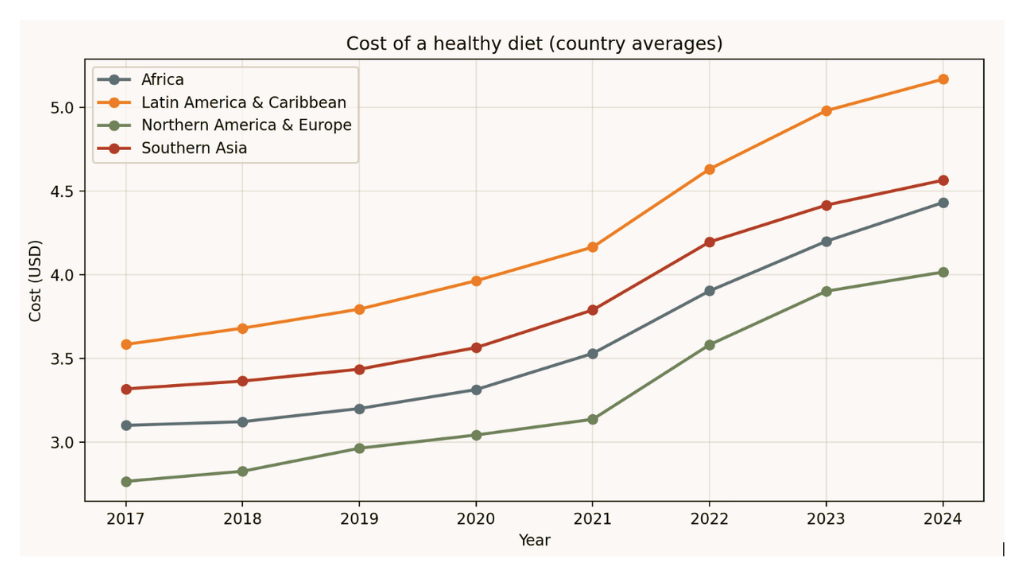
Figure 1. Affordability: The cost of a healthy diet has risen since 2019. Rising healthy diet costs highlight the importance of productivity, logistics, competition, and safety nets.
Source: Author with data from https://www.foodcountdown.org/
Source: Author with data from https://www.foodcountdown.org/
Agriculture is no longer treated only through the lens of yield and production. Agrifood systems include the people, institutions, infrastructure, markets, natural resources, technologies, policies, and incentives that shape how food is produced, processed, distributed, prepared, consumed, and governed. This wider lens matters because Africa’s food challenges cannot be solved by only producing more. They are also shaped by affordability, logistics, nutrition, climate risk, poverty, gender inequality, trade barriers, governance capacity, and institutional coordination.
The urgency behind Kampala is clear. As shown in Figure 1, since 2019, the cost of a healthy diet has risen, making affordability a binding constraint for many households. Even when food is available, it may remain economically out of reach. Inflation, supply disruptions, weak logistics, and limited competition make nutritious diets harder to access. This affects nutrition outcomes and raises the importance of productivity, infrastructure, market efficiency, and social protection.
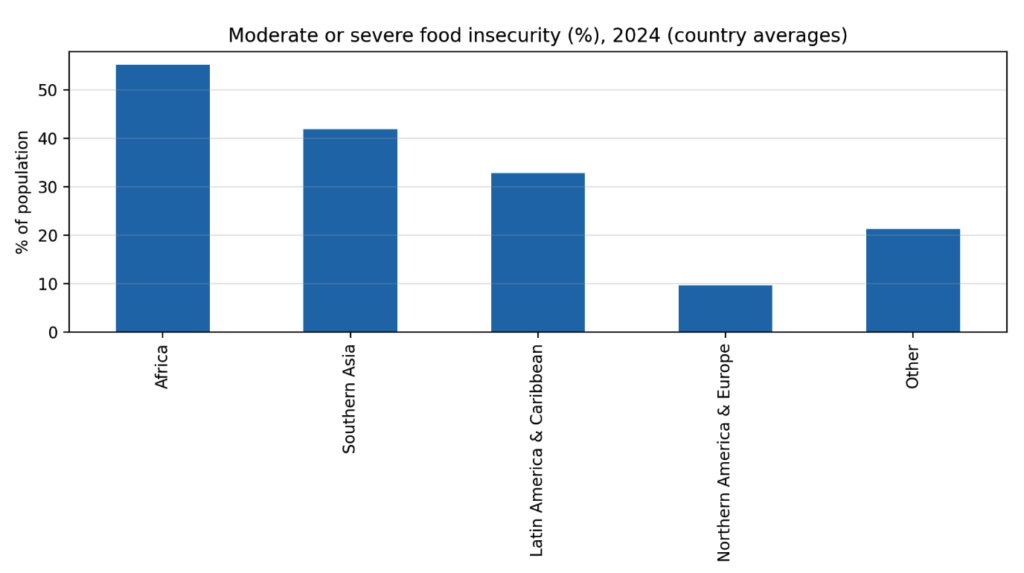
Food insecurity remains severe in Africa (see Figure 2). It is not only a humanitarian issue; it is also a development and political economy risk. It weakens human capital, increases vulnerability to shocks, and can erode trust in institutions. Addressing it requires a systems approach linking production, incomes, prices, safety nets, and resilience.
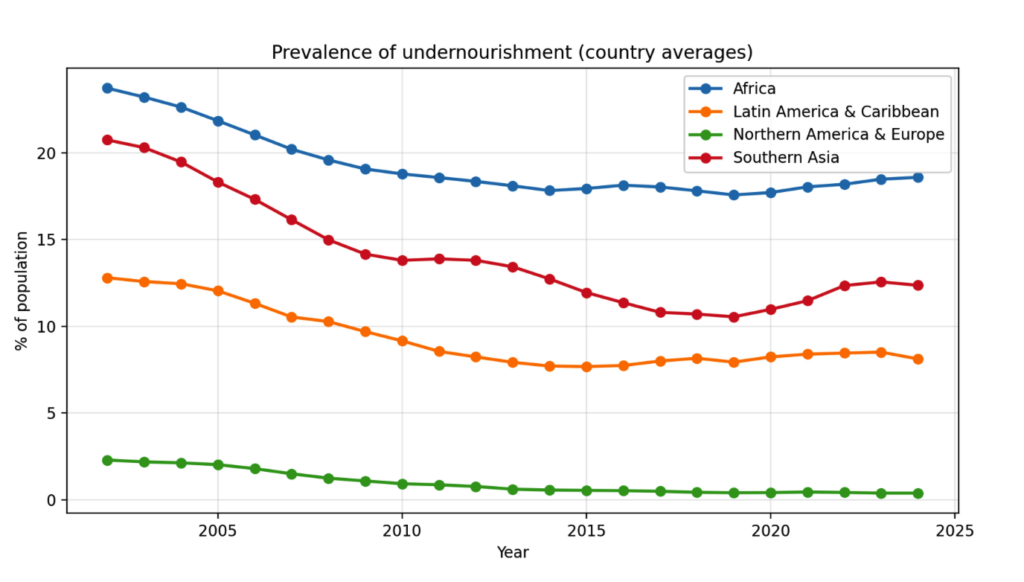
Undernourishment presents a similar challenge. Progress has been uneven and remains vulnerable to conflict, climate shocks, and economic volatility (Figure 3). The problem is not simply calories; it also involves diet quality, market access, storage, trade, and purchasing power. A resilient agrifood system must deliver nutritious food consistently, including during stress.
Source: Author with data from https://www.foodcountdown.org/
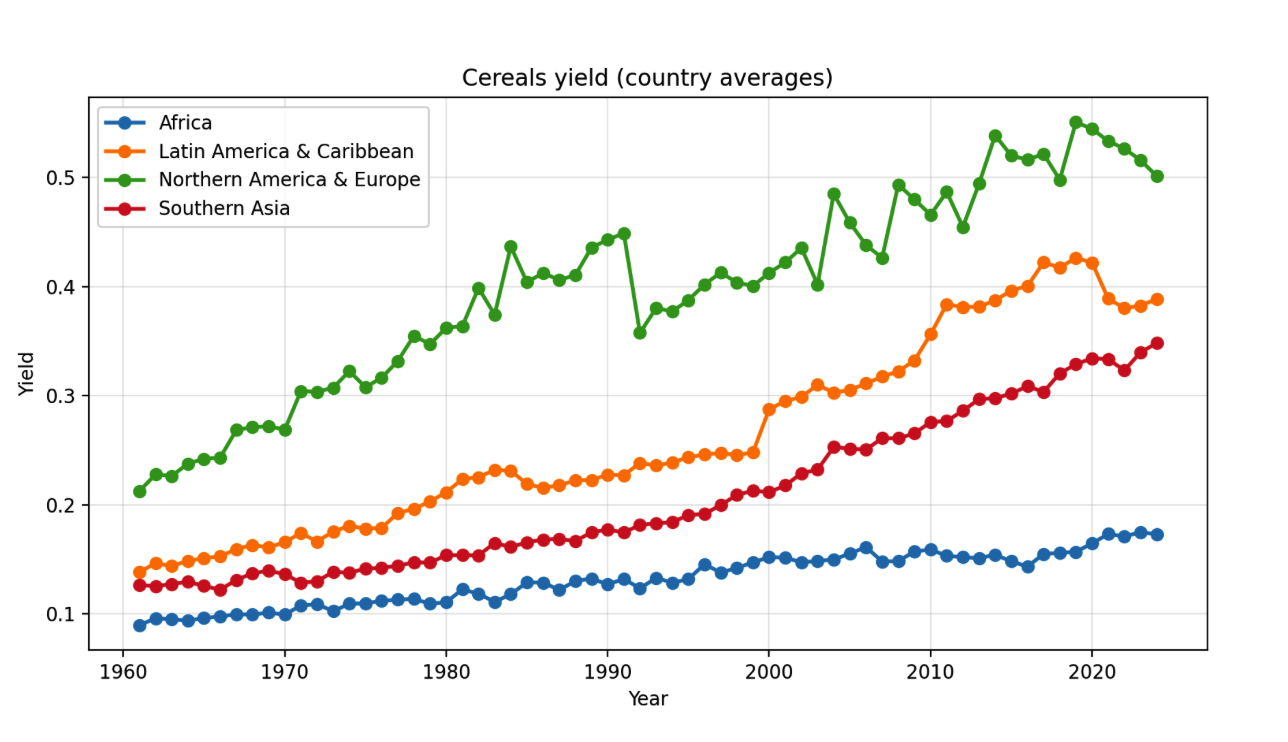
Figure 4. Productivity: cereal yields lag peer regions. Closing yield gaps is central to food security, but productivity growth must be sustainable and profitable
Source: Author with data from https://www.foodcountdown.org/
As shown in Figure 4, at the production level, Africa’s cereal yields continue to lag behind peer regions. Persistent yield gaps point to the need for better access to inputs, advisory services, water management, technology, finance, and markets. Yet Kampala also makes clear that productivity growth must be sustainable and profitable. Raising output cannot come at the cost of land degradation, biodiversity loss, or increased climate vulnerability.
One of Kampala’s most important contributions is translating broad ambition into measurable targets. As presented in Table 1, the 22 CAADP Kampala targets are organised around six strategic objectives and provide a framework for tracking progress through 2035. Their value lies in operationalising transformation. Success cannot be judged by output alone. A stronger agrifood system must produce more, lose less, trade more effectively, create value through processing, mobilise finance, improve nutrition, include women and youth, protect vulnerable households, and strengthen governance.
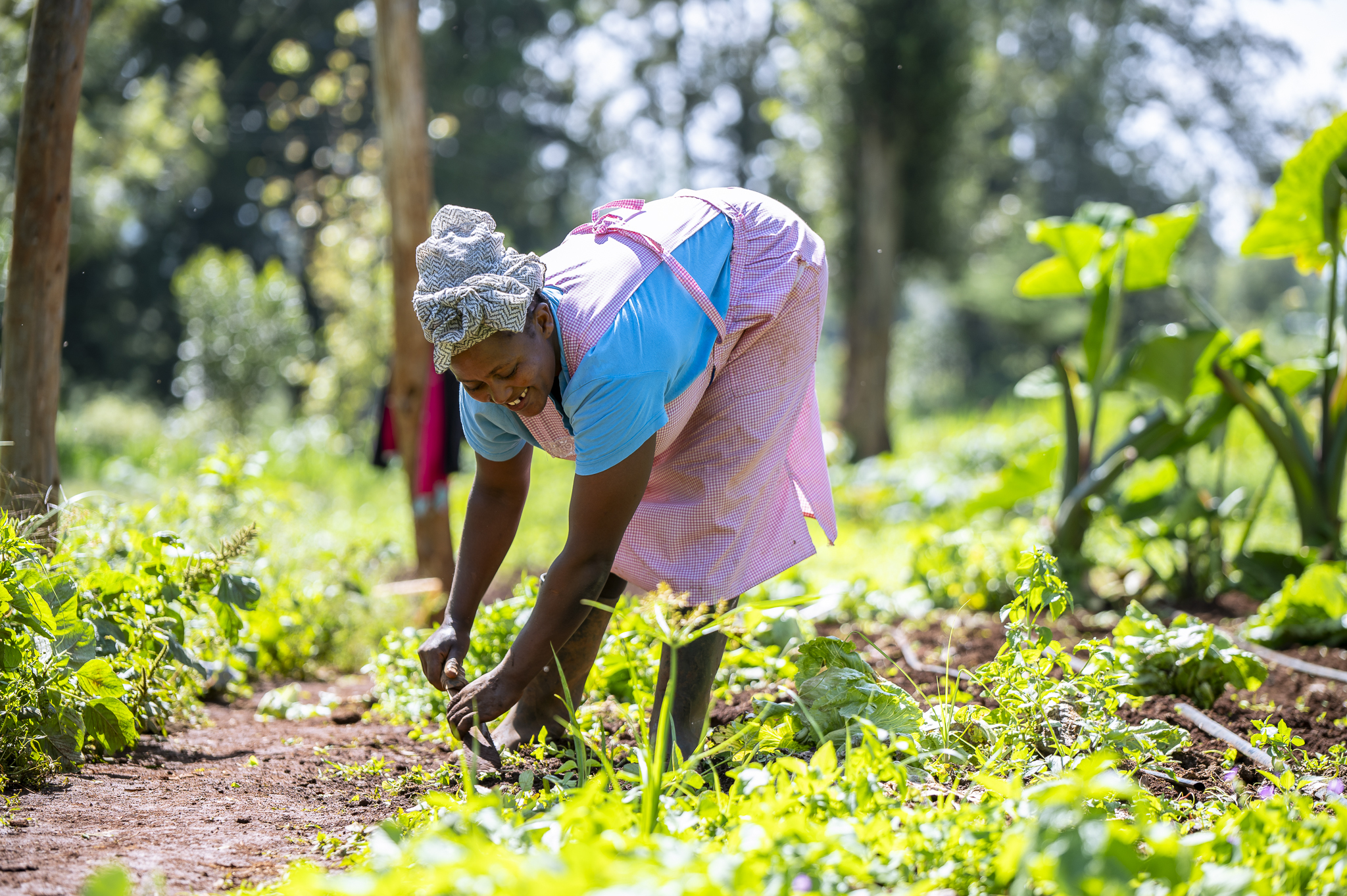

Table 1. The 22 CAADP Kampala Targets
Strategic Objective: Sustainable production, agro-industrialisation, and trade
Impact Target: Increase agrifood output by 45%; reduce post-harvest loss by 50%; triple intra-African agrifood trade; raise processed food to 35% of agrifood GDP
Strategic Objective: Investment and financing for agrifood transformation
Impact Target: Mobilize $100 billion in agrifood investment; allocate 10% of public budgets to agrifood annually; reinvest 15% of agrifood GDP annually
Strategic Objective: Food and nutrition security
Impact Target: Achieve zero hunger; reduce child stunting by 25%; reduce child wasting by 25%; reduce child overweight by 25%; ensure 60% of people can afford a healthy diet
Strategic Objective: Inclusivity and equitable livelihoods
Impact Target: Reduce extreme poverty by 50%; reduce the gender yield gap by 50%; empower 30% of women, youth, and vulnerable groups in value chains
Strategic Objective: Resilient agrifood systems
Impact Target: Place 30% of agricultural land under sustainable practices; protect 40% of households from shocks
Strategic Objective: Agrifood systems governance
Impact Target: Align all NAIPs and RAIPs by 2028; adopt governance best practices by 2028; integrate biennial review into joint sector reviews in all countries by 2030
Kampala also introduces important innovations. It expands the policy frame from agriculture to agrifood systems; broadens resilience beyond climate change; places agro-industrialisation at the centre of transformation; gives greater attention to governance and policy credibility; and expands financing beyond the 10 per cent expenditure benchmark. Farmers need inputs and technology, but also roads, storage, finance, reliable markets, and predictable trade policy. Consumers need income, stable prices, and access to diverse diets. Governments need plans and institutions capable of coordinating across ministries.
Implementation will be the real test. Many outcomes require coordinated action across policy clusters. Reducing undernourishment, for example, cannot be achieved solely by agricultural ministries. It requires policies that improve affordability, strengthen resilience, raise rural incomes, support social protection, and ensure credible governance. Yet public institutions are often organised in silos, with separate mandates, budgets, and accountability systems.
Trade-offs must also be visible. Intensification may raise production but create environmental stress if poorly managed. Trade restrictions may stabilise domestic supply in the short term but weaken market credibility and discourage investment. Without system-wide monitoring, governments may celebrate narrow gains while missing broader losses.
Kampala is therefore more than another declaration. It is a systems contract: a commitment to treat food, agriculture, nutrition, trade, resilience, finance, inclusion, and governance as interconnected parts of a single transformation agenda. Africa’s agrifood future will not be secured by a single ministry, target, or policy lever. It will depend on building systems that make healthy diets affordable, livelihoods inclusive, markets dynamic, shocks manageable, and governance credible.