“How many beans should I eat?” a question all bean-lovers, health-conscious consumers, planet-friendly eaters have wondered about.
The Beans is How Coalition unpacks what dietary guidelines actually say about beans and pulses—what “enough” looks like in real meals, recommendations from around the world, and easy ways to add more beans to your routine.
In short: beans are affordable, versatile and amazing for your health and the planet. Through simple shifts, you can easily eat more of them! Be sure to share the bean love with others by sharing this article!
So, what are dietary guidelines?
National Dietary Guidelines are public health recommendations often led by governments designed to guide how populations should eat to meet health and nutrition goals. They are often reevaluated and updated in ten year cycles. 100+ countries have them, shaped by nutrition needs, food availability, food cultures and traditions and what can be produced locally. When followed, they help prevent dietary related diseases and premature death, yet; many people don’t follow them. Yet many people don’t follow them—so let’s decode what they mean in practice and what makes them easier to follow.
The EAT-Lancet Commission’s Planetary Health Diet is a globally recognized and evidence-based framework for diets that nourish people while staying within planetary boundaries The diet describes a flexible, plant-rich model that celebrates biodiversity and cultural traditions, while calling for a just food system. Their recommendation is eating roughly 75g (dry weight) daily of beans, peas and lentils as part of a balanced diet.
The healthcare perspective:
Beans and other legumes remain one of the most important food groups promoted by the Physicians Association for Nutrition (PAN International) in dietary guidelines worldwide, supported by a strong evidence base. Legumes offer a valuable combination of plant protein, essential micronutrients, and dietary fibre (a nutrient of we need more of in many populations).
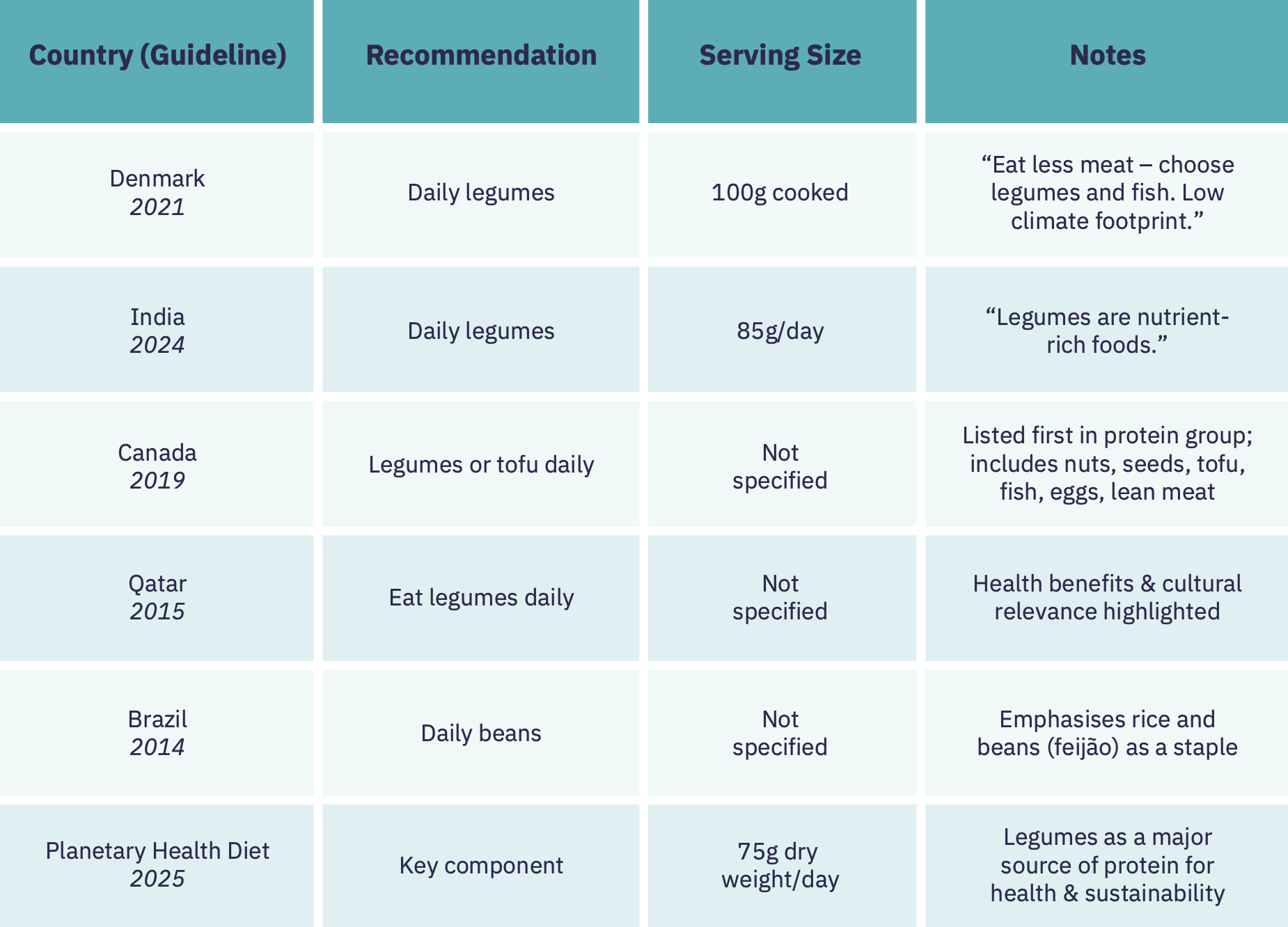
But, legume recommendations vary widely across national dietary guidelines. While some countries provide clear, quantitative guidance and integrate legumes effectively into food-based tools, others rely on more general advice. A recurring limitation is the lack of clarity around portion definitions, particularly whether recommendations refer to cooked or dry weights, which can reduce their practical applicability. There are also different recommendations for different groups, such as vegetarians, children, and pregnant or lactating women.
Encouraging examples do exist. The 2025 EAT-Lancet Commission report recommends 75 grams of dry legumes per day, offering a precise benchmark. Denmark advises 100 grams of cooked legumes daily and supports this with visual guidance that translates recommendations into realistic portions. Such approaches are particularly helpful, as perceived portion sizes can discourage consumption, despite legumes being easy to incorporate into everyday meals.
Countries such as India and Brazil further demonstrate how legumes can be embedded within dietary patterns. In Brazil, beans consumed with rice represent a widely adopted staple, while in India guidance recommends approximately 85 grams of legumes per day. These examples highlight how legumes can be both nutritionally relevant and culturally integrated. By contrast, recommendations limited to two to three servings per week may not fully reflect their potential.
From a public health perspective, incorporating legumes alongside other protein sources within the same food group is an important step forward, both in written recommendations and in visual food guides such as pyramids and plates. This approach more accurately reflects their nutritional role and supports clearer messaging. In this context, legumes are central to protein diversification, providing a practical and evidence-based way to broaden protein choices and support more balanced and sustainable dietary patterns.
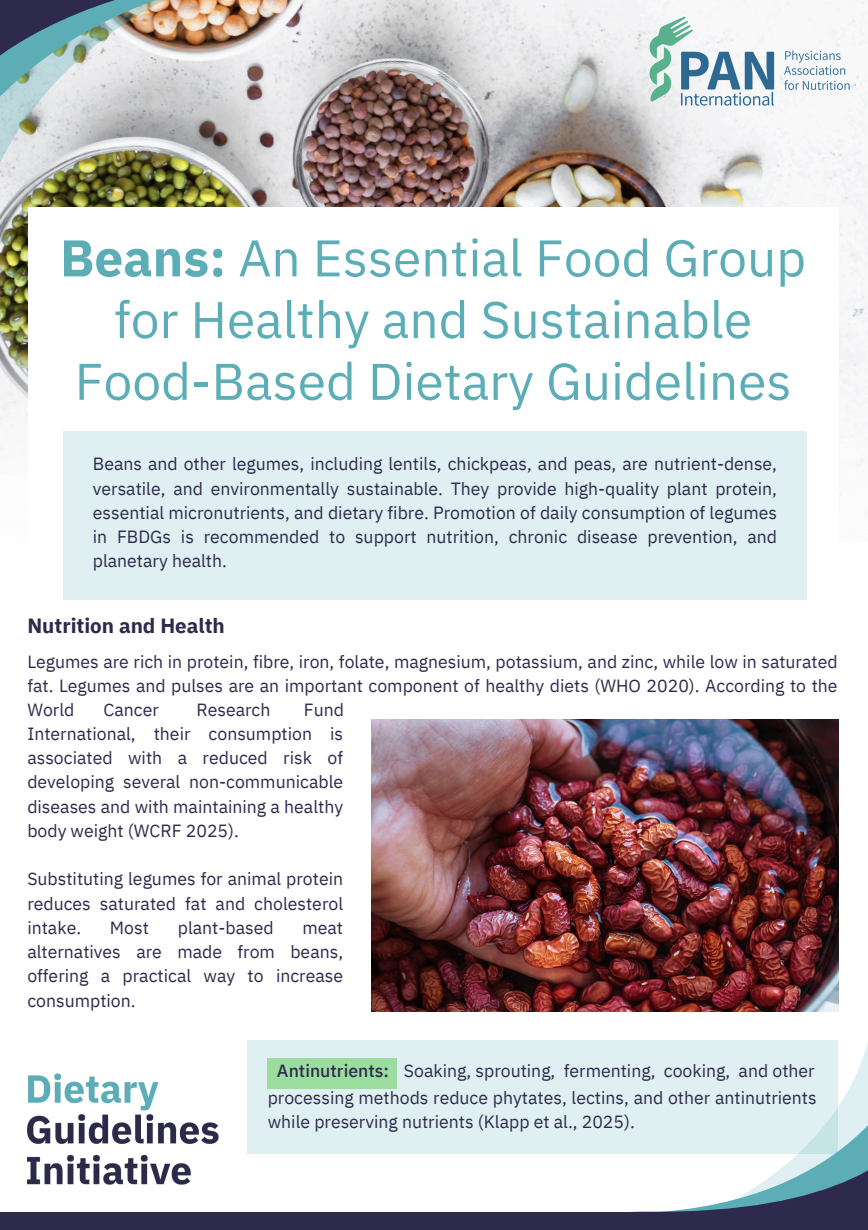
Why beans? A public health/nutrition expert weighs in:
“As a public health nutrition expert, I’m a big advocate for putting beans, lentils and peas at the centre of everyday eating because they offer a practical triple win: nutrient density, chronic disease prevention, and affordability. Pulses are rich in fibre, plant protein and key micronutrients, and their low glycaemic index can support steadier energy and blood-sugar control. That’s why the Planetary Health Diet places legumes at the heart of a healthy pattern, yet intake varies widely.
In my role as Chair of the Board of Trustees at the British Nutrition Foundation, I’ve seen this gap clearly: in the UK, 66% of people eat less than one portion of beans a week. To align with the Planetary Health Diet we’d need to increase pulse consumption around sevenfold. The good news is it’s achievable: treat pulses as a regular default, added to stews, curries, salads, sauces and spreads, or used in snacks and even desserts. Or better yet, make them the star of the plate!”
Alyson Greenhalgh-Ball, Chair, Board of Trustees at the British Nutrition Foundation and the SDG2 Advocacy Hub

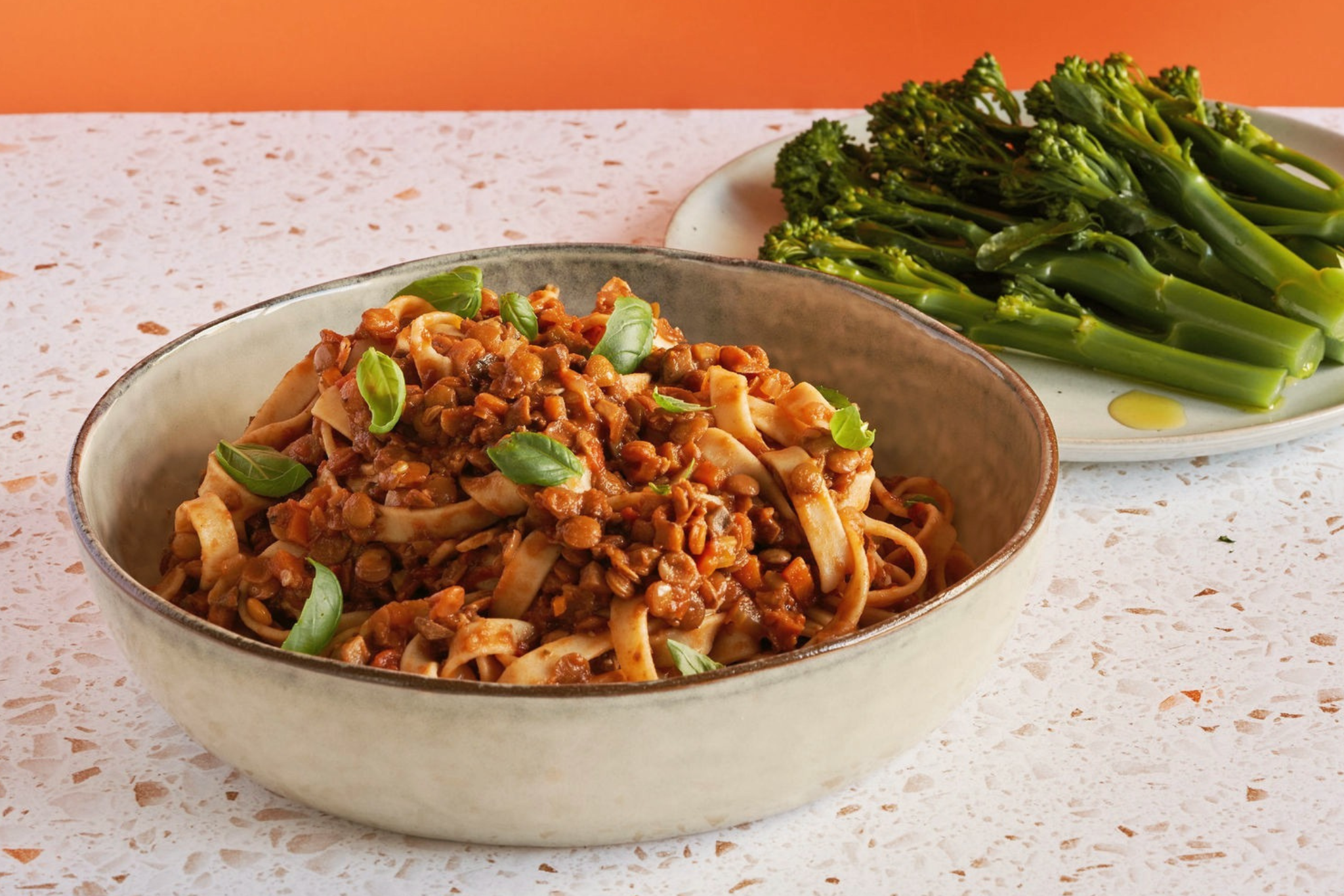
Getting more beans into your diet
Need practical advice for how to get more beans into your diet? Start with Chef Harri Maule-ffinch’s Guide: “Busting Bean Myths: The Truth about Beans, How to Cook Them and How to Eat More”.
Try out a recipe! Chef Palmiro Ocampo’s plant-forward Peruvian stew.
Rooted in tradition, this chickpea dish uses 75g of chickpeas per serving—right in line with Planetary Health Diet recommendations for daily pulse intake. It highlights pulses and vegetables – featuring a creative twist with dried broccoli leaves. Simple, nourishing, and ready in 20 minutes. Try it yourself!
Curious about guidelines by country?
🇳🇱 The Netherlands just about doubled their recommended intake of beans
In the updated Dietary Guidelines released last week, The Netherlands is building upon the plant-based protein transition they started in 2023 to officially raise the importance of pulses in policy. Read more.
🇹🇼 New draft dietary guidelines in the works in Taiwan
Green Dining Guide broke down what’s new in Taiwan’s 2026 draft Dietary Guidelines – including the first-time addition of “plant-forward eating,” a bigger role for beans and soy, and a stronger push on whole grains, all linked to both health and sustainability goals. Learn More.
🇺🇸 In New York? Support farmers by buying local
Guidelines only matter if they show up on plates. Public procurement—like New York’s 30% Initiative, which incentivises schools to spend at least 30% of their lunch budgets on food grown in-state – can support farmers while shaping healthier diets. Beans is How partner, Matriark Foods is contributing by making New York State–grown, low-sodium black beans more accessible for wholesale—helping bring more pulses onto menus. For more information, contact sales@matriarkfoods.com or visit matriarkfoods.com.