By Nanzala Lazarus, Senior Policy Officer, SDG2 Advocacy Hub
When the U.S. President Donald Trump returned to the United Nations General Assembly, he did not mince words about his disdain for climate action. He told the gathered world leaders — and indeed whoever was listening — that climate change was “the greatest con job ever perpetrated on the world”. He warned that countries embracing what he called the “green scam” were setting themselves up to fail. His words echoed decades of delay, inaction, and denial; it was a reminder that the battle for a livable planet is also a battle over truth, trust, and political courage.
This defiance against climate reality hung in the background as multiple moments converged this past September. With COP30 in Belém less than two months away, the summit carried an unmistakable urgency: world leaders can no longer treat climate action and ambition as optional. The credibility of global climate governance itself was on trial, as was earlier reflected at the Africa Climate Week that preceded the UNGA.
African leaders gathered at the summit stressed that climate adaptation is critical, particularly in nations facing the triple burden of debt, food insecurity, and extreme weather. Africa’s annual adaptation needs are estimated at $84 billion, yet funding barely reaches $14 billion.
A Dedicated Climate Summit for World Leaders at the UNGA
The United Nations Secretary-General, António Guterres, and Brazilian President Inácio Lula da Silva co-convened the Leaders Climate Summit in the margins of the 80th UN General Assembly. Scientists Dr. Johan Rockström and Dr. Katharine Hayhoe opened the meeting with a blunt counter to Trump-style skepticism. Rockström reminded leaders that global warming has already breached 1.5°C, albeit temporarily, and the world is on track to cross it permanently within the decade. “Failure is not inevitable; it is a choice,” he said. Hayhoe added, “Every year matters. Every choice matters. Not to the planet, the planet will endure. It matters to us.” Their message left no room for notions of climate as a “hoax.” It framed the debate in human terms and realities. The stakes are lives, livelihoods, and ecosystems, not just abstract numbers.
Guterres directly rebuked the fatalism that Trump’s words represented. “We know what permanently breaching the 1.5-degree limit would mean for people and the planet. The science compels climate action. So does economics,” he declared. Clean energy, he emphasized, already attracts twice as much investment as fossil fuels, making the case not just moral but financial.
Guterres further outlined five urgent priorities: turbocharging the energy transition, slashing methane emissions, ending deforestation, deploying clean technologies in heavy industry, and advancing climate justice through scaled finance for developing nations. He pressed leaders to deliver new 2035 plans, the nationally determined contributions that are aligned with 1.5°C targets.
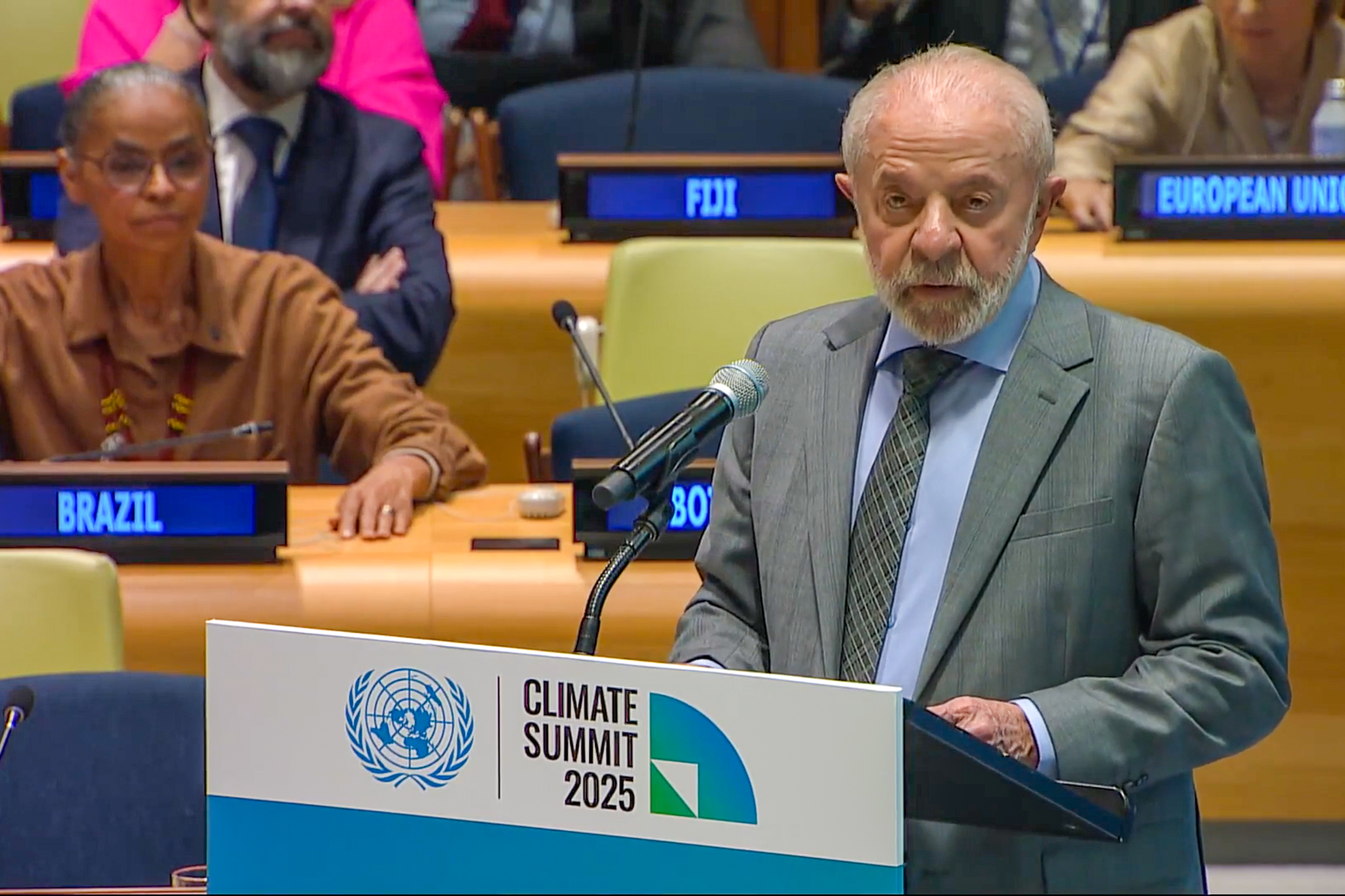
The Summit’s co-host, President Lula, declared “Fatalism [as] the worst enemy of action,” to his fellow leaders. He described COP30, to be held in the Amazon, as the “COP of truth.” Brazil, he pledged, will cut emissions by up to 67 per cent by 2035 and end deforestation by 2030.
But Lula’s sharper point was political: “If we do not make a decision, society is going to stop believing its leaders.” For him, empty rhetoric, whether from outright denial or from half-measures, was a greater danger than the climate crisis itself.
African Leaders Delineate Path Forward to Fight Climate Change
That same rejection of fatalism rang clear from Africa. Ethiopian President Taye Atske Selassie reported back from the Second Africa Climate Summit held in Addis Ababa, where nearly 25,000 participants joined forces to craft The Addis Ababa Declaration on Climate Change and call to action. “Africa is not waiting to be rescued,” he said. “We are charting our own path, but we cannot do it alone.”
Among other commitments, the declaration created the Africa Climate Innovation Compact (ACIC) and the African Climate Facility that will seek to mobilise $50 billion annually in catalytic climate finance to champion climate solutions that accelerate innovation and scale local climate solutions across the African continent.
He further demanded that African deliverables be mainstreamed into COP30 outcomes and decisions. “We cannot talk about justice if those who did the least to cause the crisis continue to suffer the most,” Selassie insisted.
Kenya’s President William Ruto reinforced this vision. Having already submitted Kenya’s third Nationally Determined Contribution, he argued that ambition without finance is hollow. “Africa has the solutions for large-scale emission reductions,” he said, “but the finance must flow.” He highlighted solidarity levies on premium-class airline tickets and a pledge by African financial institutions to mobilise $100 billion in green investment. “Economic growth and climate action are inseparable,” Ruto declared.
In a show of solidarity for climate action, several world leaders used the summit to announce new or updated commitments through the nationally determined contributions. President Xi Jinping outlined China’s pledge to peak emissions before 2030 and reduce them by up to 10 percent by 2035, while scaling solar and wind capacity to 3,600 gigawatts.
European Commission President Ursula von der Leyen reaffirmed Europe’s leadership, noting that EU emissions are already down nearly 40 percent since 1990, whilst pledging a 66–72 percent reduction by 2035. She also previewed a 2040 target of 90 percent cuts, part of the EU’s pathway to climate neutrality by 2050.
Australia’s Prime Minister Anthony Albanese announced a new target of reducing emissions by 62–70 percent by 2035, presenting Australia as a clean energy partner for the Indo-Pacific. Leaders from Turkey, Pakistan, and Barbados also highlighted strengthened national targets, but repeatedly returned to the same point: without adequate finance and technology transfer, progress will remain constrained.
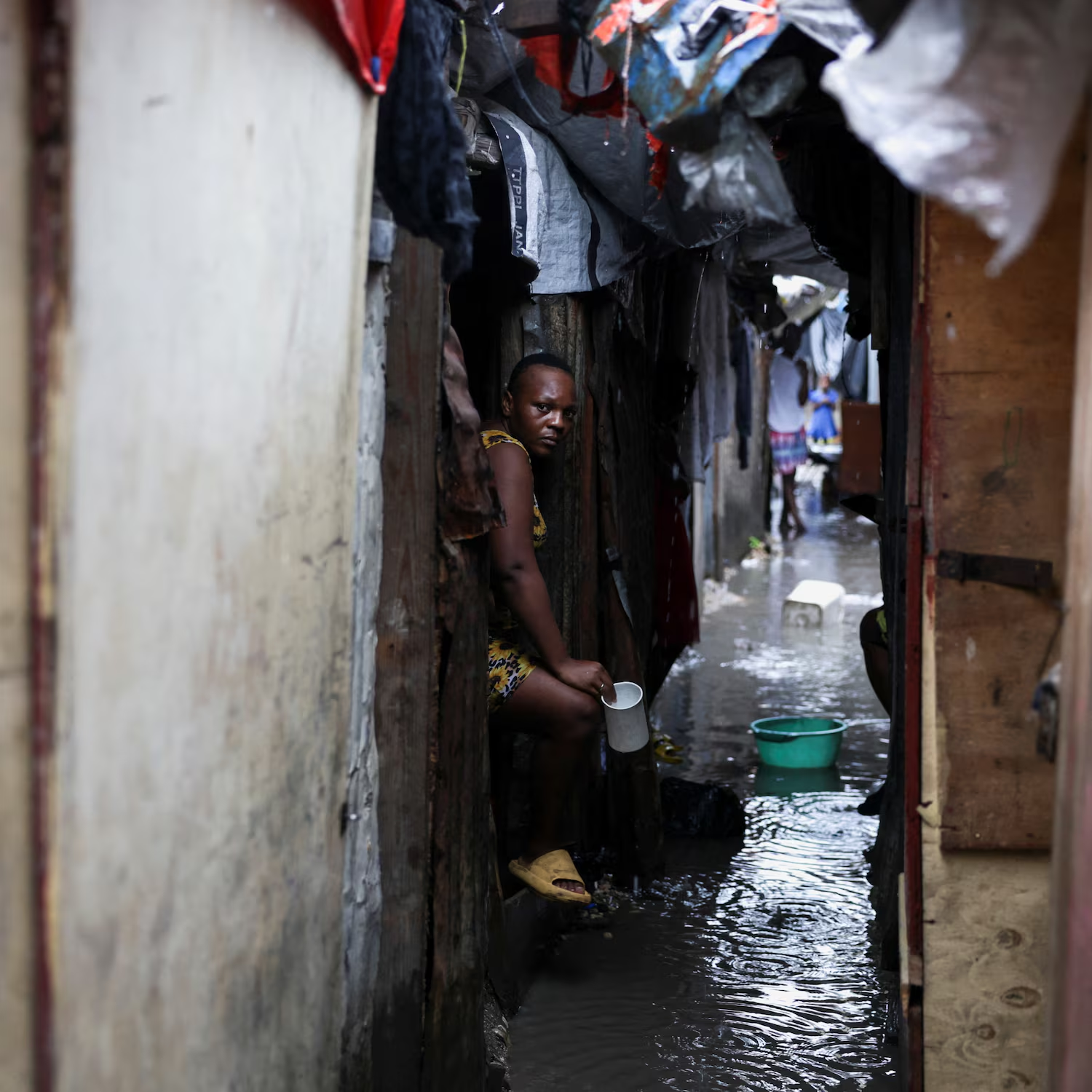
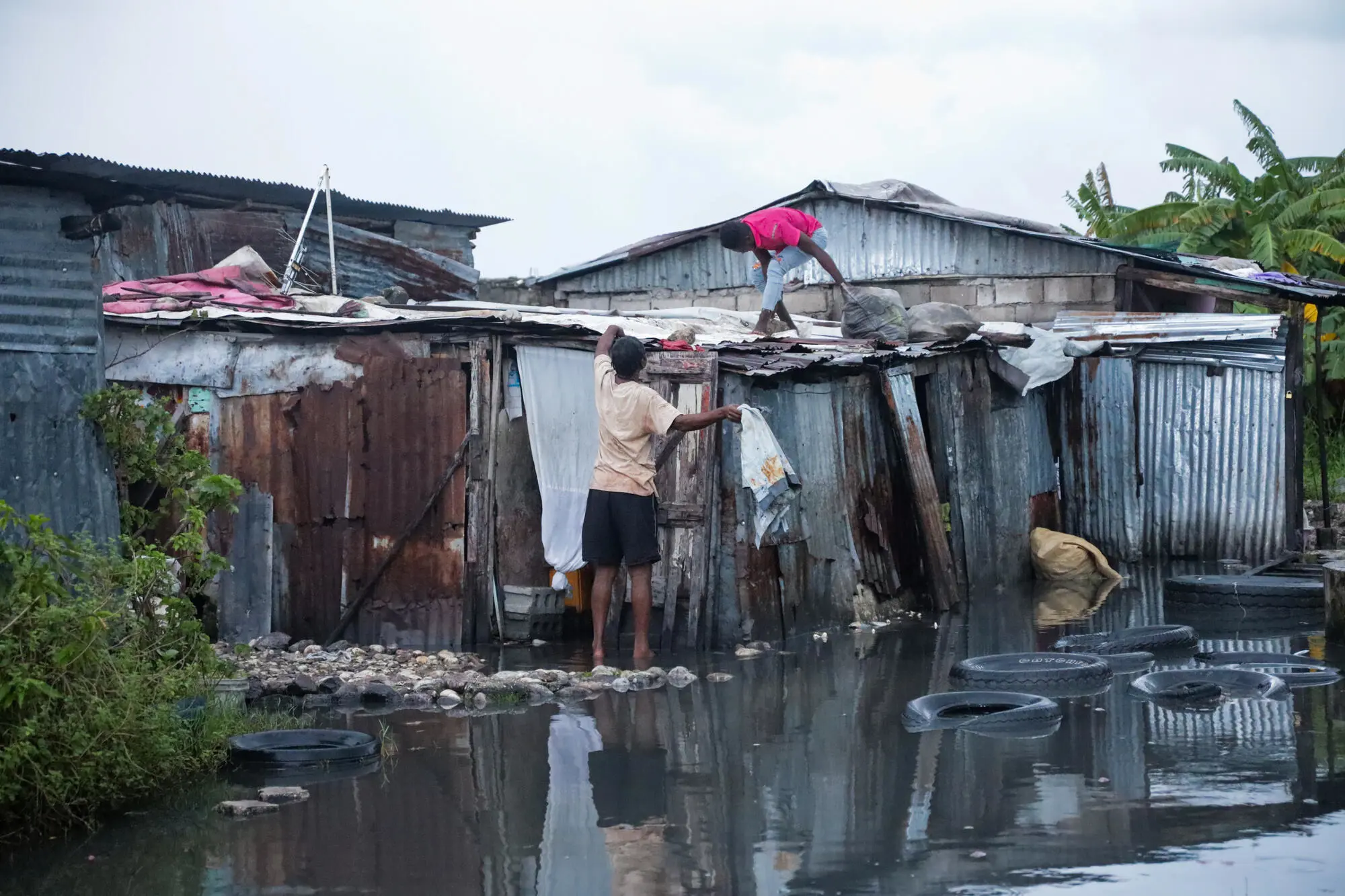
For small island states, the urgency is existential. Speaking for the Alliance of Small Island States, Palau’s President Surangel Whipps Jr. reminded leaders that rising seas, stronger storms, and disrupted ecosystems are not future scenarios but lived realities. “Delay is defeat,” he said. For vulnerable nations, transformational action at COP30 is not optional; it is survival.
New York to Belem
The summit closed with urgency and resolve. The ghost of Trump’s words referencing climate change as a “con job” hovered in contrast to the determination expressed in New York. Where Trump saw failure, leaders now see opportunity. Where he mocked renewables, they are outpacing fossil fuels. Where he warned of collapse, science, economics, and justice align in calling for acceleration.
COP30 in Belem will be the decisive test; will world leaders live up to their commitments, or will history side with the skeptics who dismissed climate action as folly? The tools exist, the pathways are known, and the cost of delay is unbearable.
The world will be watching.