The deep purples of aubergine, the bright orange of pumpkin, the vivid green of spinach, and the golden glow of jackfruit each can signify different flavours, nutrients, and traditions. This diversity on the plate is not just beautiful; it’s the foundation of good nutrition.
Across cultures, food traditions have long celebrated variety. From Indian Thalis and Ethiopian Beyaynatus to Mediterranean Mezze, diverse dishes bring together grains, pulses, fruits and vegetables in rainbows of colours and tastes. Eating a colourful mix of fresh, seasonal vegetables, fruits, beans, peas, and lentils fuels our health and sustains the people and planet we depend on.
Good food is nutritious, and nutritious food is diverse.

The Evidence is Clear…
Scientific evidence consistently shows that diverse diets are vital for human health. The World Health Organisation recommends consuming at least 400 grams of fruit and vegetables each day to reduce the risk of chronic disease. Similarly, the Food and Agriculture Organisation’s Minimum Dietary Diversity (MDD) indicator shows that eating from at least five of the ten food groups daily strongly predicts adequate nutrient intake. In simple terms, a broader diet provides a broader range of vitamins, minerals, and protective compounds – the building blocks of good nutrition.
However, global diets are becoming increasingly narrow. The EAT-Lancet Commission reports that just three crops – rice, wheat, and maize – now provide over half of the world’s plant-based calories. When our diets lose diversity, so too does our nutrient intake. A limited diet can leave us deficient in key nutrients, less resilient to illness, and disconnected from the rich variety nature offers, while contributing to soil depletion and climate stress.

The importance of Global Citizenship and Education for Sustainable Development
Ending hunger and malnutrition (SDG 2) is inseparable from education for sustainable development (SDG 4.7). People cannot choose nutritious, sustainable diets if they lack access to knowledge, food literacy and cultural understanding of what good food looks like. Food education shapes habits early, influences lifelong wellbeing and strengthens our collective ability to build food systems that nourish everyone.
Learning how food is grown, prepared and shared empowers individuals and communities to make informed choices that support health, equity and sustainability. Understanding the components of a healthy, sustainable diet is therefore not only a nutrition outcome, but also an education outcome, rooted in awareness, skills and values.

The good news?
There is a resurgence of interest in colour and diversity. From youth-driven social media content celebrating multi-coloured “bowls” to chefs reintroducing heritage vegetables, this movement is growing. Each time we choose a rainbow of produce, we are strengthening both personal health and the resilience of food systems.
Colours in fresh produce are one of the simplest ways to understand dietary diversity and guide us toward nutritious food. Each hue in our food can indicate a unique set of nutrients:
- 🥬 Green vegetables like spinach and kale can be rich in iron, folate, and magnesium.
- 🥕 Orange and yellow foods such as pumpkin and mango can provide beta-carotene, vital for vision and immune function.
- 🍆 Red and purple produce, like beetroot and eggplant, can offer antioxidants that protect against disease.
By filling our plates with a spectrum of colours, we naturally increase the range of nutrients our bodies receive. A colourful, diverse meal can be quite literally more nutritious.

Some of the people behind good, nutritious and diverse food

Science explains why dietary diversity matters, but lived experience shows us what it looks, tastes, and feels like. Around the world, chefs, farmers, and food innovators are bringing these ideas to life through tradition, creativity, and care for both people and planet. Their stories remind us that good food is not defined by nutrients alone, but by the connections it builds between flavour and health, soil and sustenance, and culture and wellbeing.
A Chef’s Perspective
Chef Moyo Odunfa
Chef Moyo Odunfa is a Nigerian chef known for transforming local ingredients into vibrant, flavourful dishes. Her cooking blends West Africa’s rich culinary heritage with creativity, proving that nutritious food can also be deeply satisfying. With a gift for making delciious food, Moyo offers a powerful perspective on why a diverse and colourful diets matter; for our wellbeing, our cultures, our environment and the joy of eating itself:
“I believe it’s important for everyone to enjoy a diverse and colourful diet because it provides the opportunity to enjoy the full bounty of nature. Creation is vast – all the colours of the rainbow can be found in our natural grains, fruits, vegetables, tubers, legumes and herbs – eating them in their various colours and employing a variety of cooking methods enables us to enjoy all the nutrients available to us.
Diversity in our diets is also good for the soil – as we plant different things over various seasons. Thereby giving the soil the opportunity to rest, regain nutrients and release them once again. Eating seasonally is also essential, it helps us enjoy the nutrients we need most whilst the produce is at its peak. We can maximise flavour, creativity, nutrition and sustainability when we eat diverse and colourful diets, based on seasonally grown local produce.”

An Entrepreneur’s Perspective
Taylor Quinn
Taylor Quinn is a Canadian social entrepreneur and the founder of Tailored Foods. His organisation redefines how affordable, nutritious food is created within local food economies. Working across Africa, Latin America and Southeast Asia, he designs solutions that respect culture, strengthen markets and showcase the delicious potential of locally grown foods.
“At Tailored Food, our entrepreneur partners have shown us how local crops can be used in simple, yet deliciously nourishing ways.
In Liberia, Power Gari, a fermented and fortified cassava porridge, turns a staple food into a reliable source of vitamins and minerals for children.
In Kenya and Mozambique, peanuts are roasted and ground into spreads and snacks that not only taste good but also provide families with affordable protein.
In Uganda, soybeans and bananas are combined in new recipes that retain their familiar flavours while meeting today’s nutritional needs.
In Rwanda, brightly coloured spice blends made from dehydrated fruits and vegetables offer young children a diverse range of meals.
In Tanzania, local cereals are baked into breads and biscuits that families enjoy daily.
Time and again, these examples demonstrate that building a diverse diet does not require introducing new things, but about utilising regional foods in ways that bring both flavour and improved nutrition to the table.”
Across data, lived experiences, and scientific expertise, there is broad consensus that a diverse, colourful diet rich in fresh foods tends to be nutritious, climate-friendly, and delicious.

Wonderful Jackfruit
Few foods embody the power of diversity as beautifully as jackfruit. In southern India, it has long been known as the “wonder fruit.” Its golden pods can be enjoyed ripe for sweetness or unripe as a hearty ingredient in curries and stews. For generations, families have relied on jackfruit as a seasonal staple that nourishes many at once. Today, it is also recognised for its climate-smart potential: jackfruit trees are hardy, drought-resistant, and remarkably productive – each capable of yielding hundreds of kilograms of fruit annually. Its story is a reminder that colourful, diverse foods are often good for both people and the planet.

What can you do?

Make One Healthy Change
This isn’t about one size fits all; it’s about possibility. You could consider:
🫐Choose three different coloured vegetables for dinner tonight – greens, reds, purples and yellows all count.
🥦Build meals around what’s in season locally; it’s usually fresher and more affordable.
🥕Cook once, enjoy twice: roast or steam a colourful mix and use leftovers in soups, wraps, or rice bowls.
🌽Make it social: invite friends or family to a “rainbow meal” night where each person brings a dish of a different colour.
Every choice we make at the table is a chance to spark change. Adding more colour to our meals nourishes us, supports farmers who grow diverse crops, preserves food traditions, and strengthens resilience in the face of global challenges. You don’t need to change everything about the way you eat, just start with adding one extra colour today! Invite others to share the experience, swap recipes, and celebrate the beauty of diversity.
Small actions make a big difference!


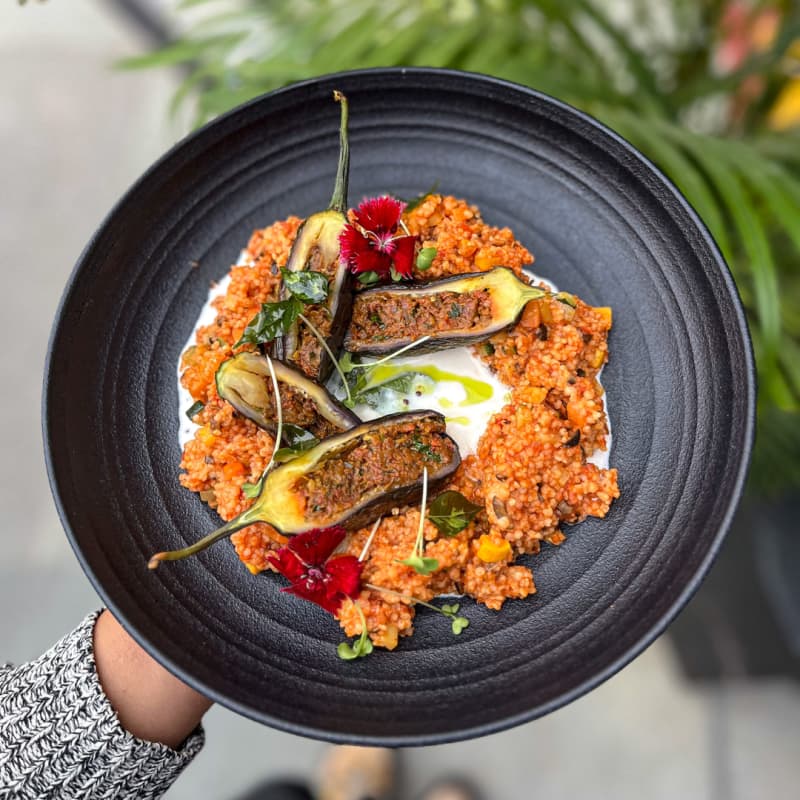
Spice Baked Aubergine and Millets
This is a very quick and easy recipe that’s not only delicious and healthy but is also very filling. I’m using Kodo Millet - it is estimated to have been domesticated in India 3000 years ago. Kodo Millets are a good source of magnesium which is known to be promoting heart health. It helps to reduce blood pressure and is highly fibrous.