By weaving ancient traditions with modern creativity, Grove and Meadow, in collaboration with Kenyan chefs, is proving that the journey from farm to fork can heal landscapes and livelihoods alike.
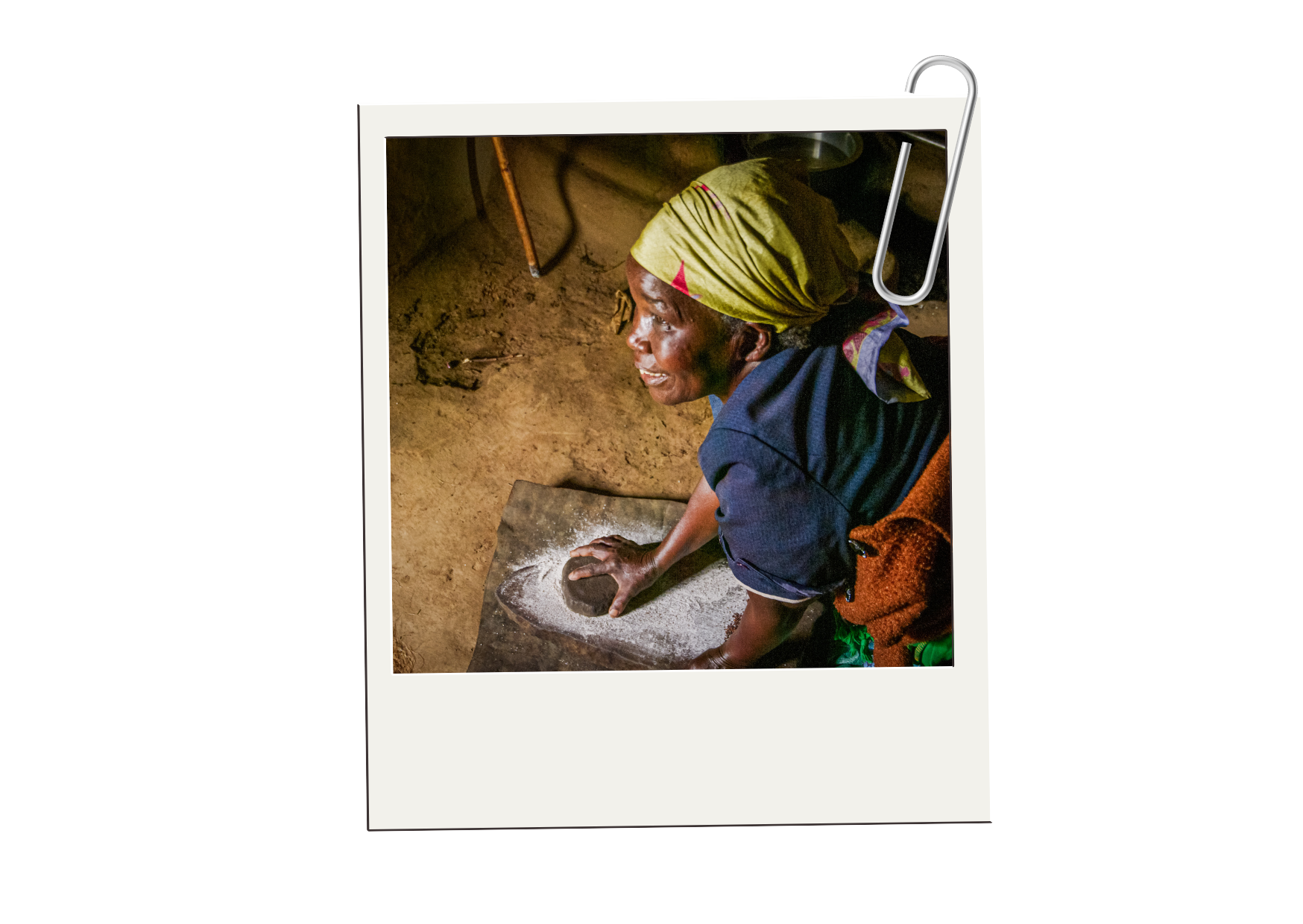
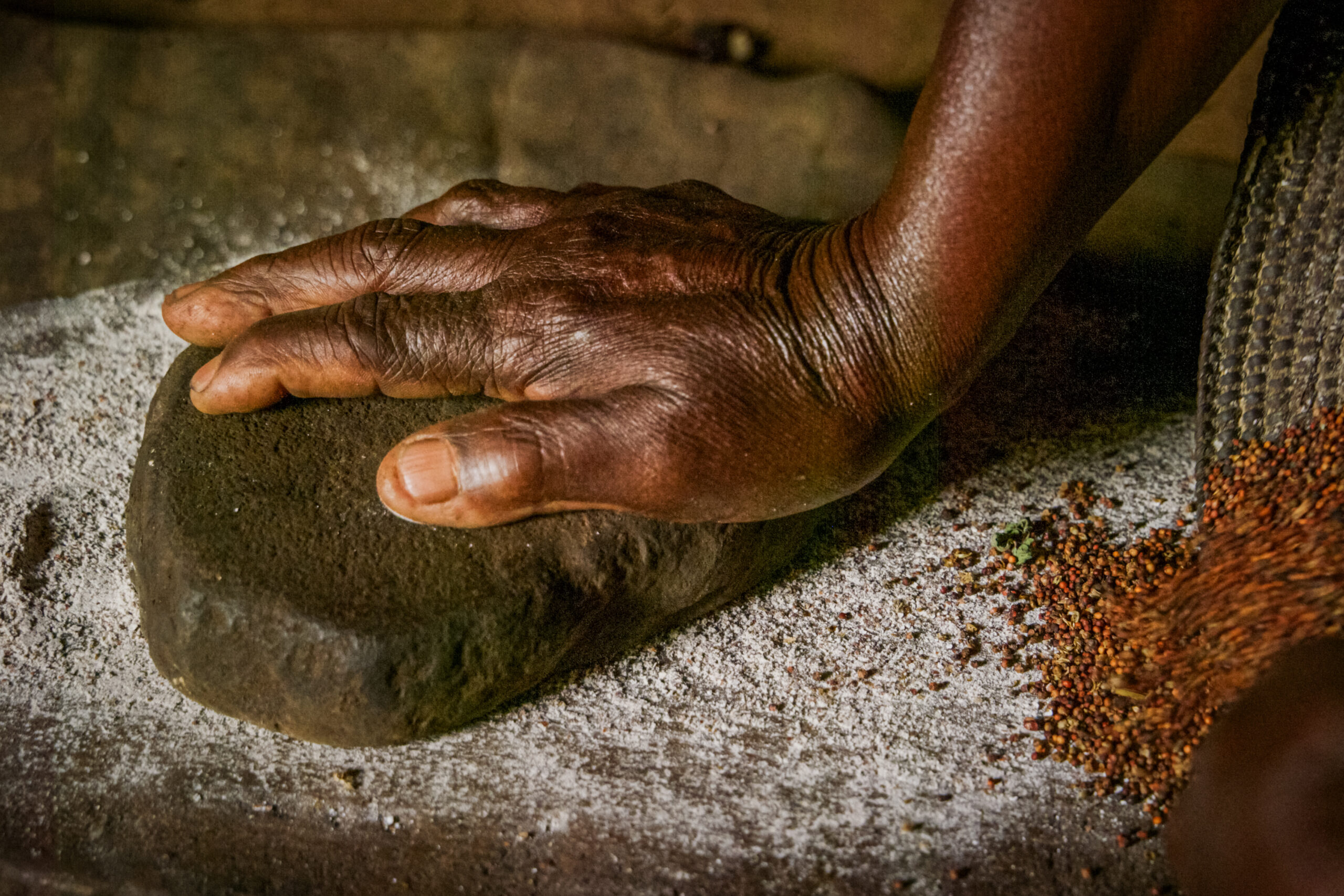
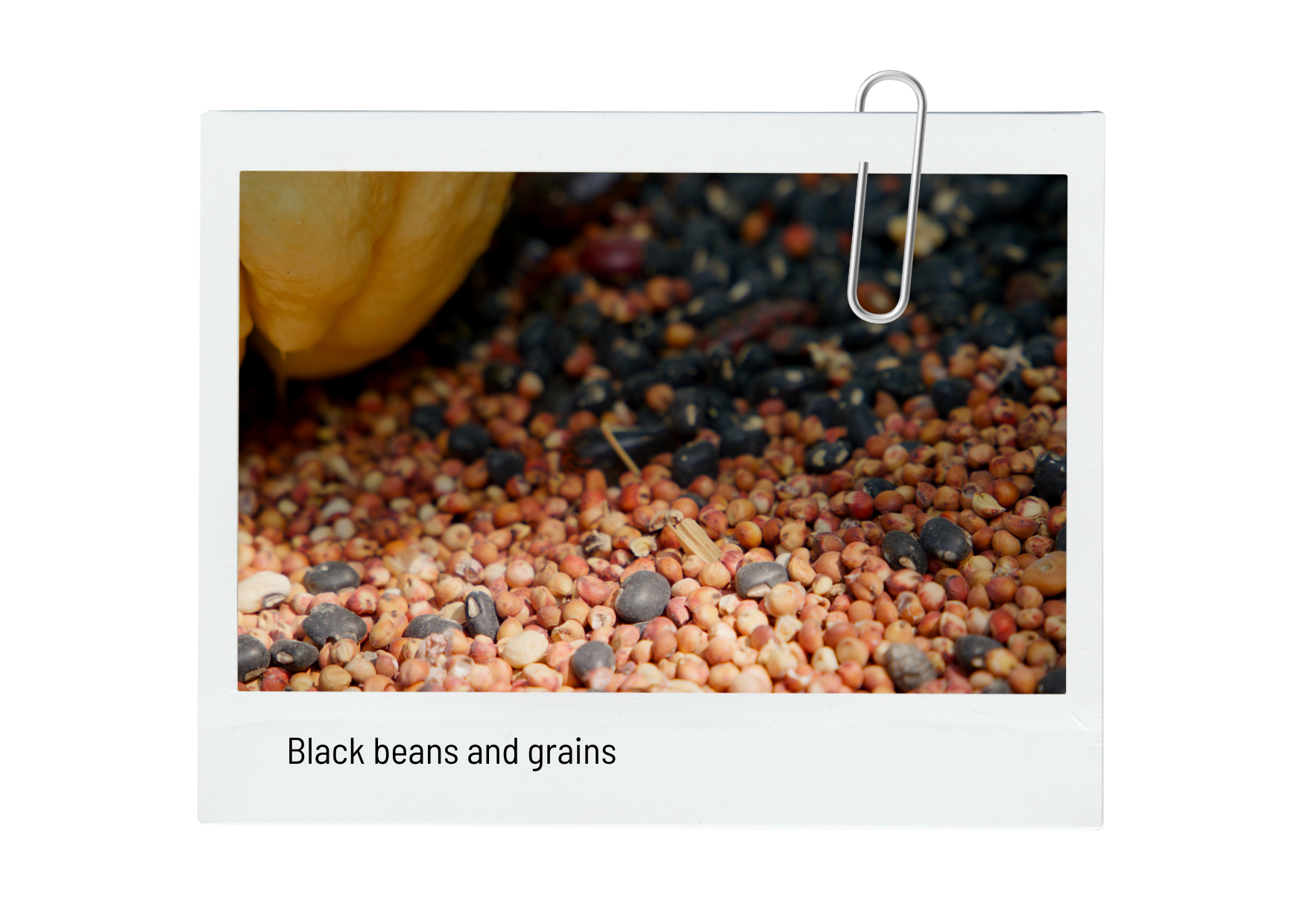
In our beautiful wooden classroom, Esther gently stirs a bubbling pot of fermented millet, cassava and sorghum porridge (uji). Nearby, jars of soaking noe beans and sprouting red sorghum seeds line the counter; ingredients coming alive with nutrients. This scene captures our philosophy of food vitality: the equation we share with lodge chefs is simple. Vitality = nutrient density + nutrient diversity + bioavailability × presence – meaning biodiverse food grown in living soil, prepared with traditional techniques, and savoured with mindfulness.
We host creative trainings at our Living Food Campus where we introduce chefs to heritage skills like fermentation, baking with forgotten grains, and slow soaking that unlock flavour and nutrition. The result is food that is literally teeming with life, from wild yeast in sourdough to probiotic-rich nut spreads. It’s a return to what our grandmothers knew that truly good food is alive, and its vitality nourishes us far beyond calories.
Beyond the Plate – A Philosophy of Connection
At every training, we invite chefs to look beyond the plate in front of them and see the ripple effect it carries. This “Food Beyond the Plate” philosophy means recognising that each recipe is part of an ecosystem – connected to the farmer who saved the seed, the soil that nurtured it, and the community that kept the recipe alive.
We challenge chefs to ask bigger questions such as What hidden cost or benefit travels on this plate? Answering these questions turns cooking into a form of activism. It empowers chefs to become agents of change, aligning with the Chefs’ Manifesto ethos that as chefs, we have the power to lead this movement toward sustainable food systems. When a lodge chef chooses a climate-resilient local grain over an imported staple, or designs a menu to minimise waste, those choices inspire guests and support farmers alike. Every small act in the kitchen from composting scraps, showcasing an indigenous vegetable, buying direct from biodiverse farms is a statement that food can regenerate, not deplete, our world.
Gathering Unlikely Allies for Food System Change
Some of our most impactful moments happen away from the kitchen altogether. At our Living Food Campus, we host food system change events that feel more like festivals of ideas. An unfamiliar group of chefs, farmers, artists, policymakers, and entrepreneurs interact with one another, all titles left at the door. These interdisciplinary gatherings are deliberately unhierarchical – a local farmer’s voice carries as much weight as a famous restaurateur’s. By meeting as people, not positions, we create space for radical imagination. Chefs leave their comfort zone behind the stove and engage with storytellers and soil scientists.
The aim is for these conversations to spark wild new collaborations where no idea is too bold. This is how our “third space” events break silos and generate solutions that nourish both planet and people. We’ve seen shy lodge cooks transform into confident advocates, standing up to say, “I’ll start a kitchen garden for heirloom varieties” or “vow to integrate them into my menu”, In these moments, we glimpse what a food system led by creativity and community might look like. A true symphony of diverse voices, all seated at one big, inclusive table.
Unearthing Forgotten Foods
Strengthening a resilient food system in Kenya also means rescuing flavours from the brink of extinction. Across the world, we’ve lost about 75% of our crop diversity in the last century and Kenya is no exception – modern diets here have narrowed to around 7 staple crops. To counter this trend, we embark on journeys to unearth culinary culture. Recently, we traveled to Lamu, an island steeped in Swahili culture, to learn from locals about ingredients long absent from urban plates.
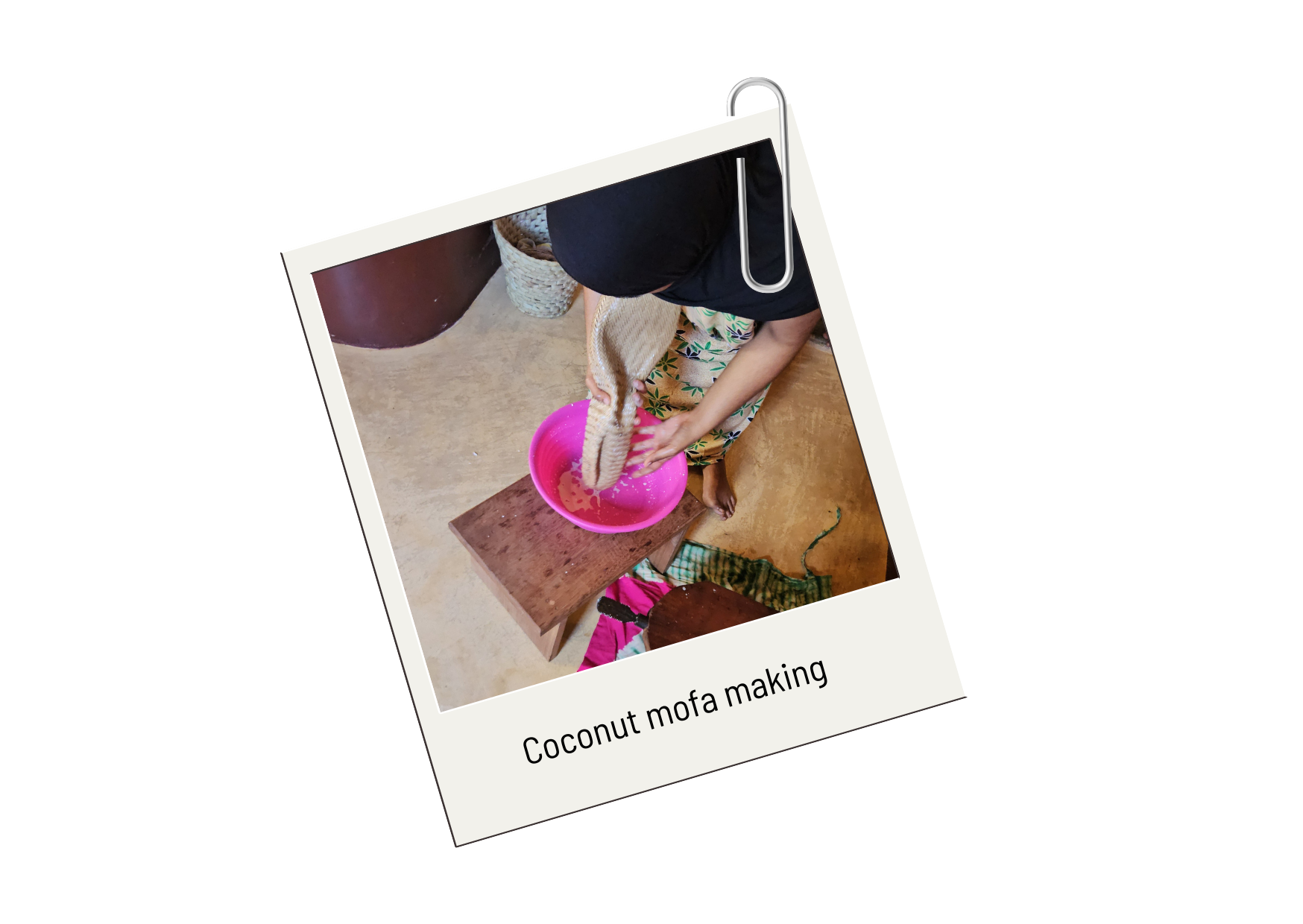
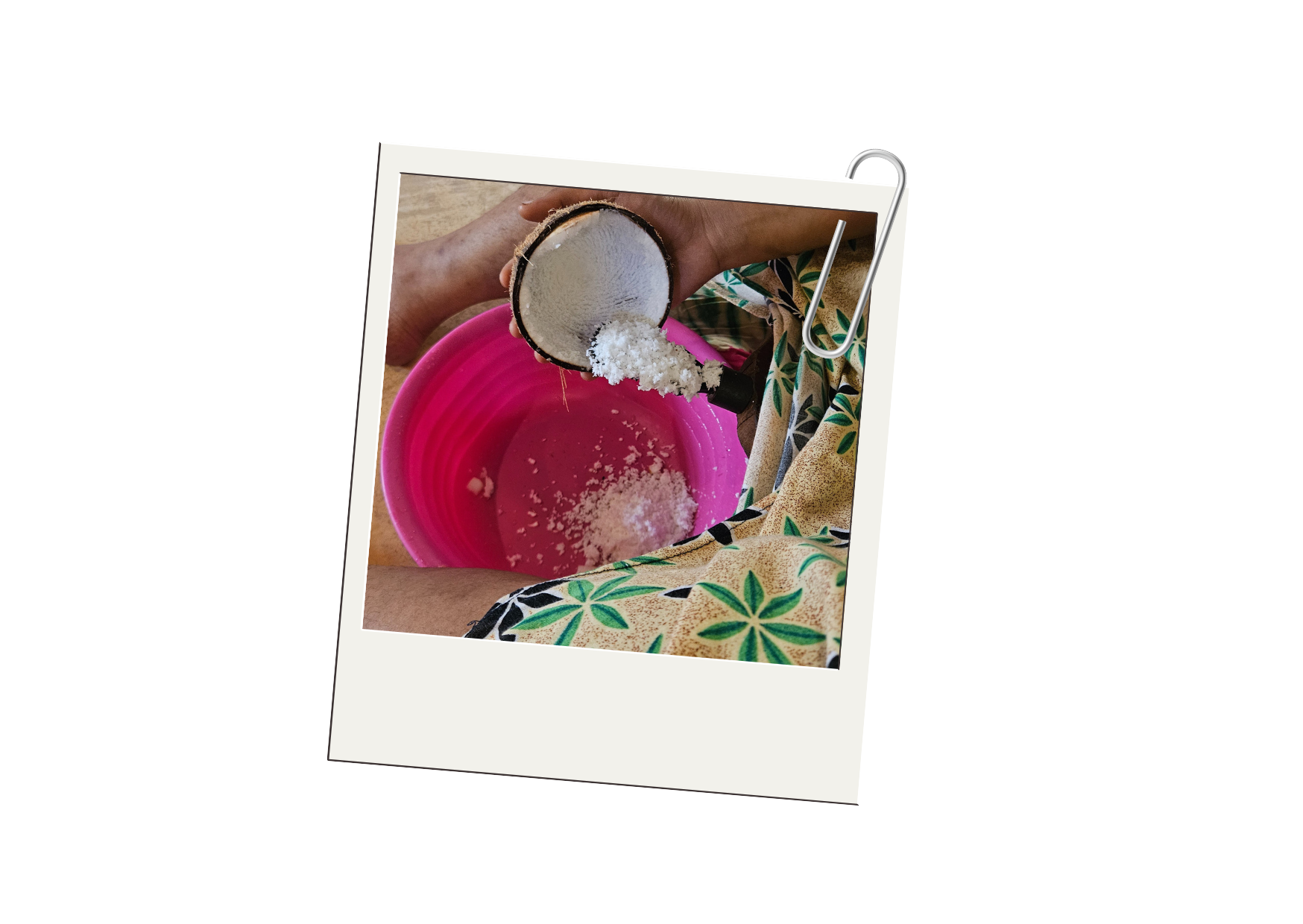
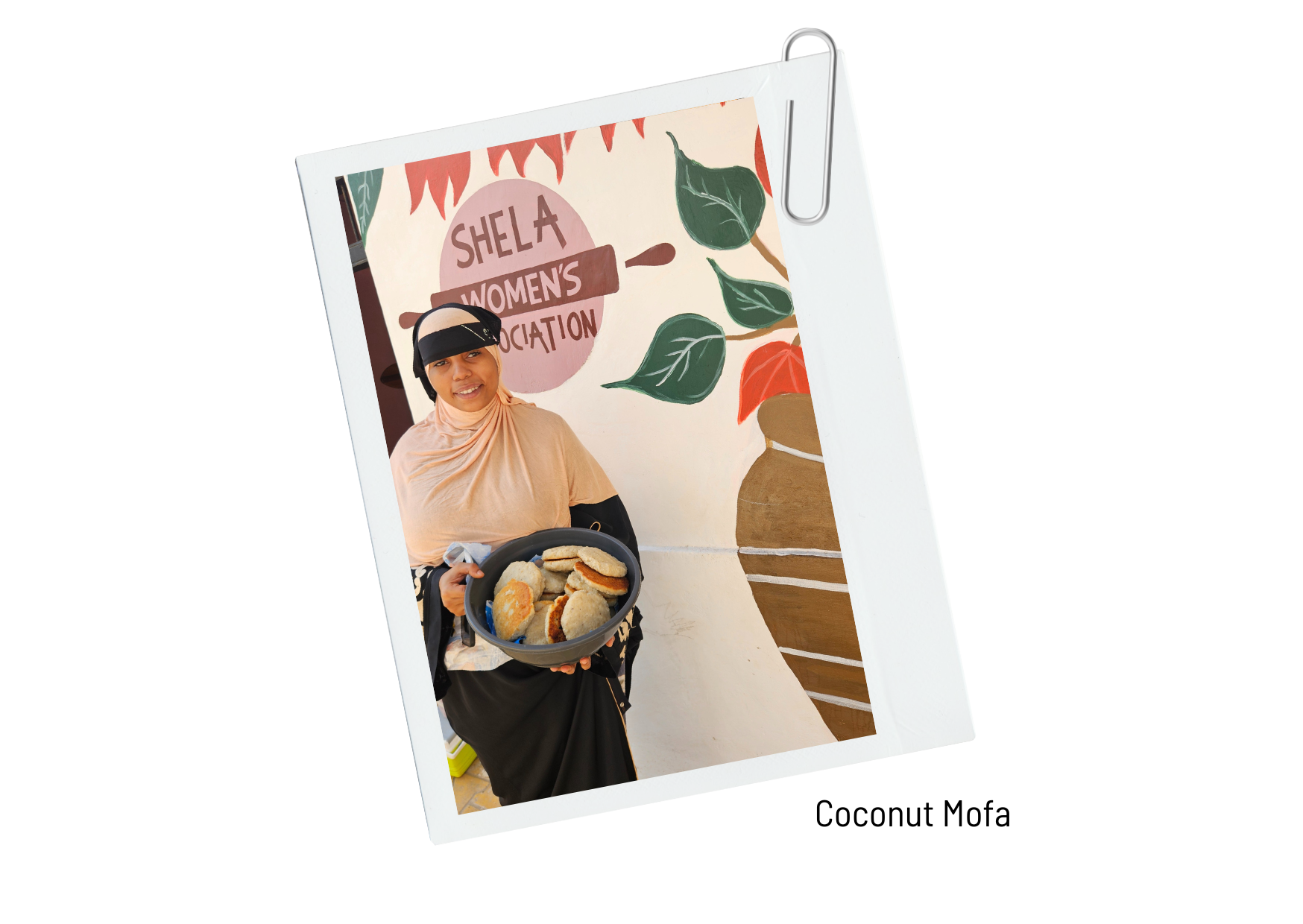
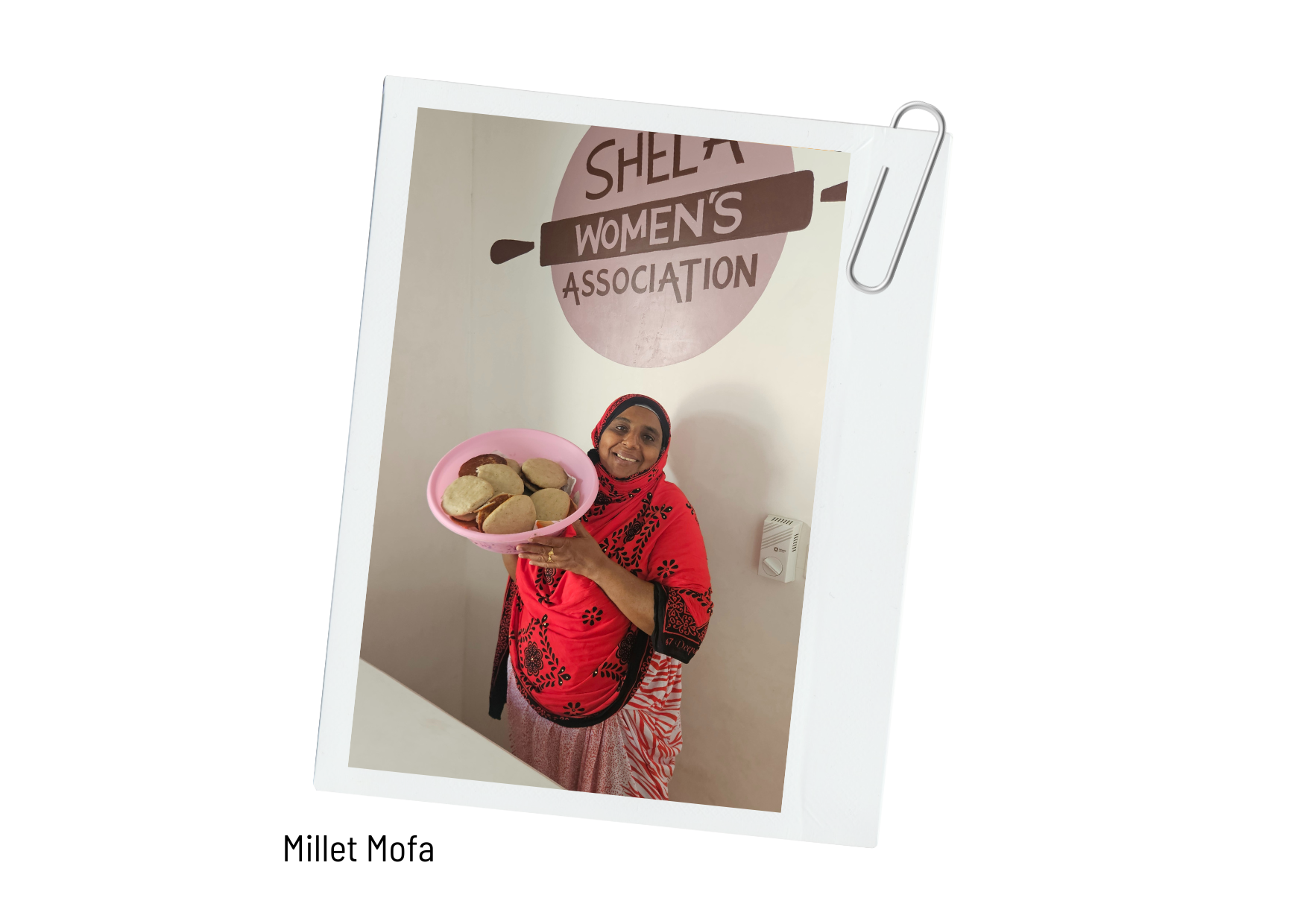
One morning, we gathered in a coastal kitchen to watch coconut being grated fresh with traditional reed grass utensils. Afterwards, we enjoyed mkate wa nazi, a dense coconut bread once common in Lamu, fragrant with freshly grated coconut, maize flour and cardamom. A woman also made savoury mofas for us the old way with just onions, water and millet flour. The mofas being sold on the streets of Lamu today are a mixture of wheat and millet, and with this they’ve lost their nutritional strength. We wondered how often “lost” recipes are hiding in plain sight? Now, back at the campus we’re adapting millet mofa into a slow-fermented sourdough english-muffin that lodge chefs can easily recreate, keeping the soul of the original while making it accessible to new audiences.
On that same journey, we noticed a puzzling sight. Cafés and restaurants importing packaged coconut milk while fresh coconuts literally fell from the trees outside. It hit home how global supply chains often blind us to local abundance. By simply switching to locally made coconut milk, those businesses could support coconut farmers and preserve culinary authenticity. Small changes with big impact.
It also struck us that so many recipes seemed to be on the verge of being forgotten. We had to dig deep to unearth memories about a dessert beloved by grandmothers but virtually unknown to the youth: Bambara groundnuts (njugu mawe) cooked into a sweet pudding with coconut cream, jaggery, and a pinch of salt. Today, we’re bringing Bambara nuts back to the table experimenting with new recipes and showing chefs how to incorporate this protein-packed legume into everything from rich stews to plant-based brownies. Each time a chef features these African plants on a menu, diners taste a piece of heritage. Such dishes become living archives of culture, sparking conversations and that curiosity is contagious. It creates demand for diverse crops and rekindles pride in local foodways, helping stop the cycle of “eating to extinction” one ingredient at a time.
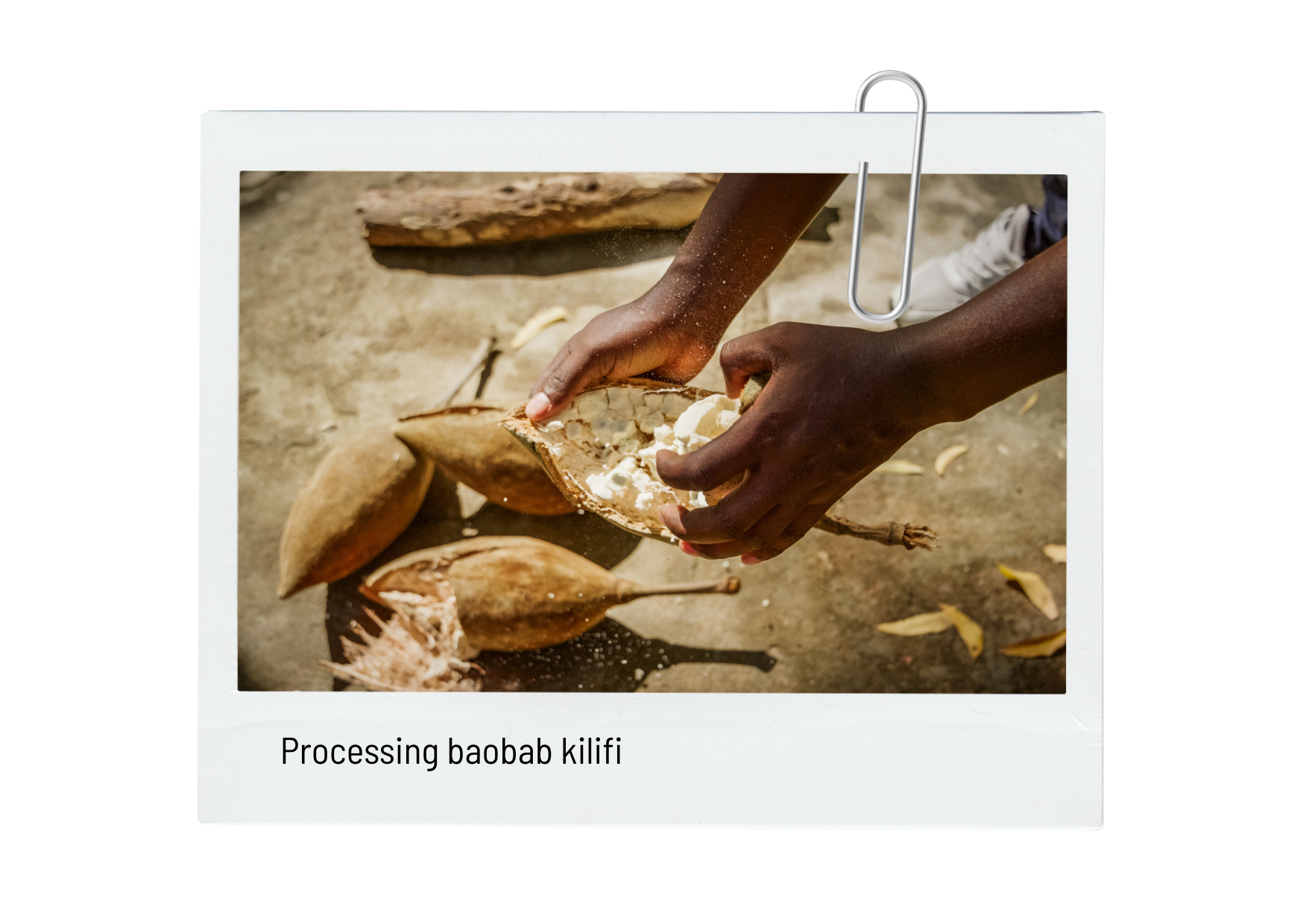
From Soil to Safari – Food as a Conservation Tool
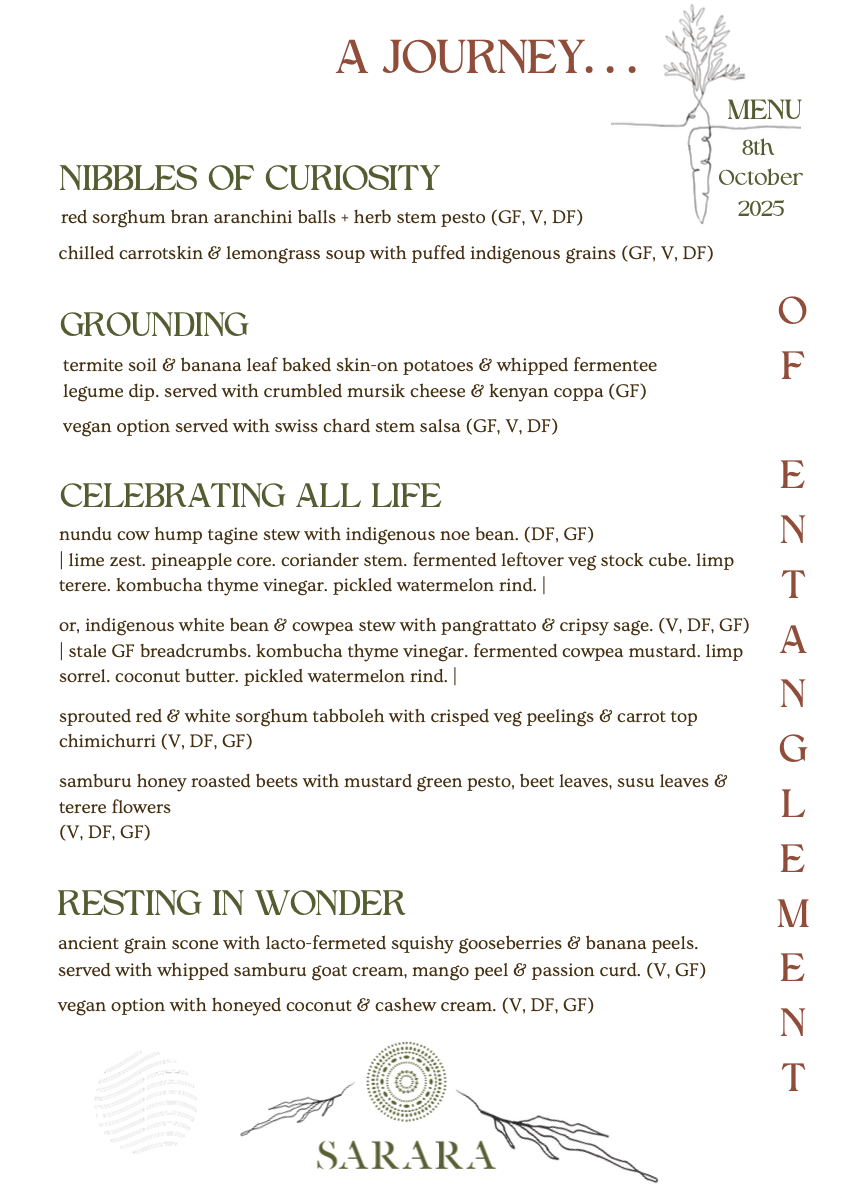
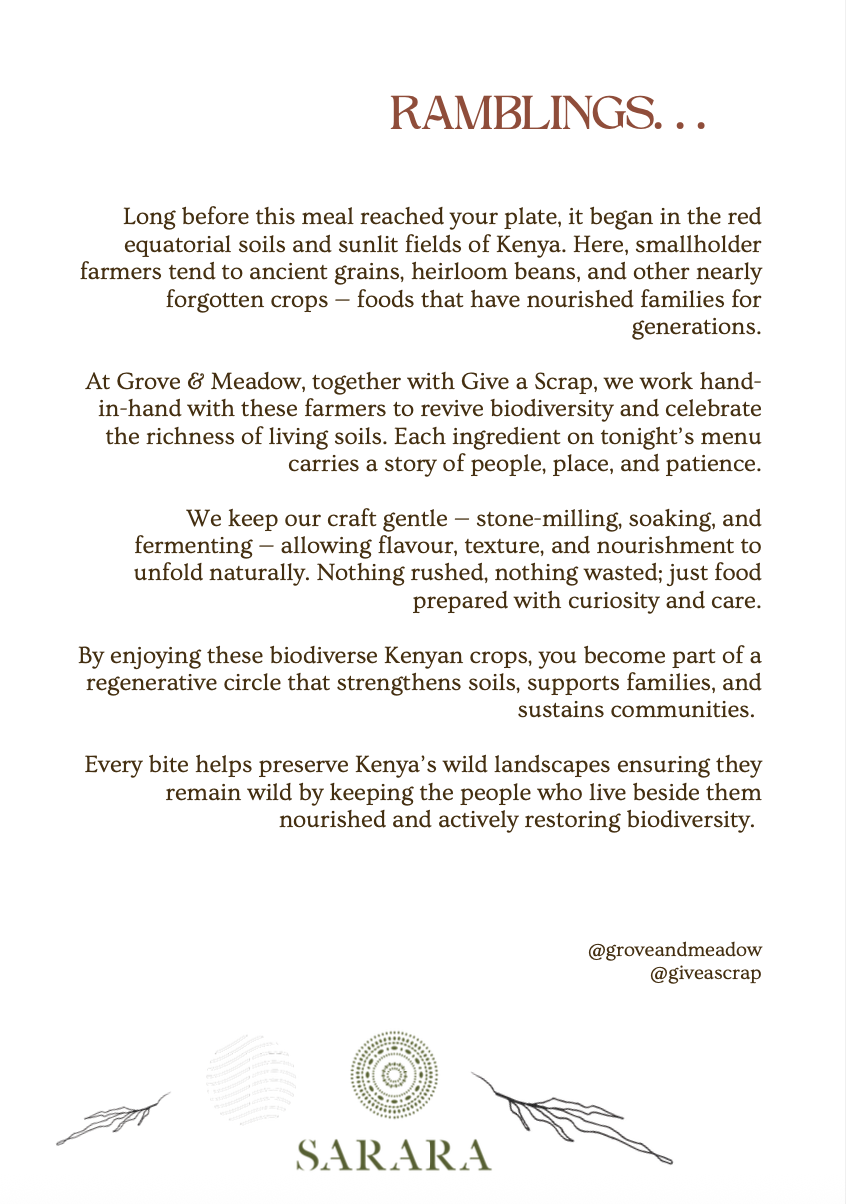
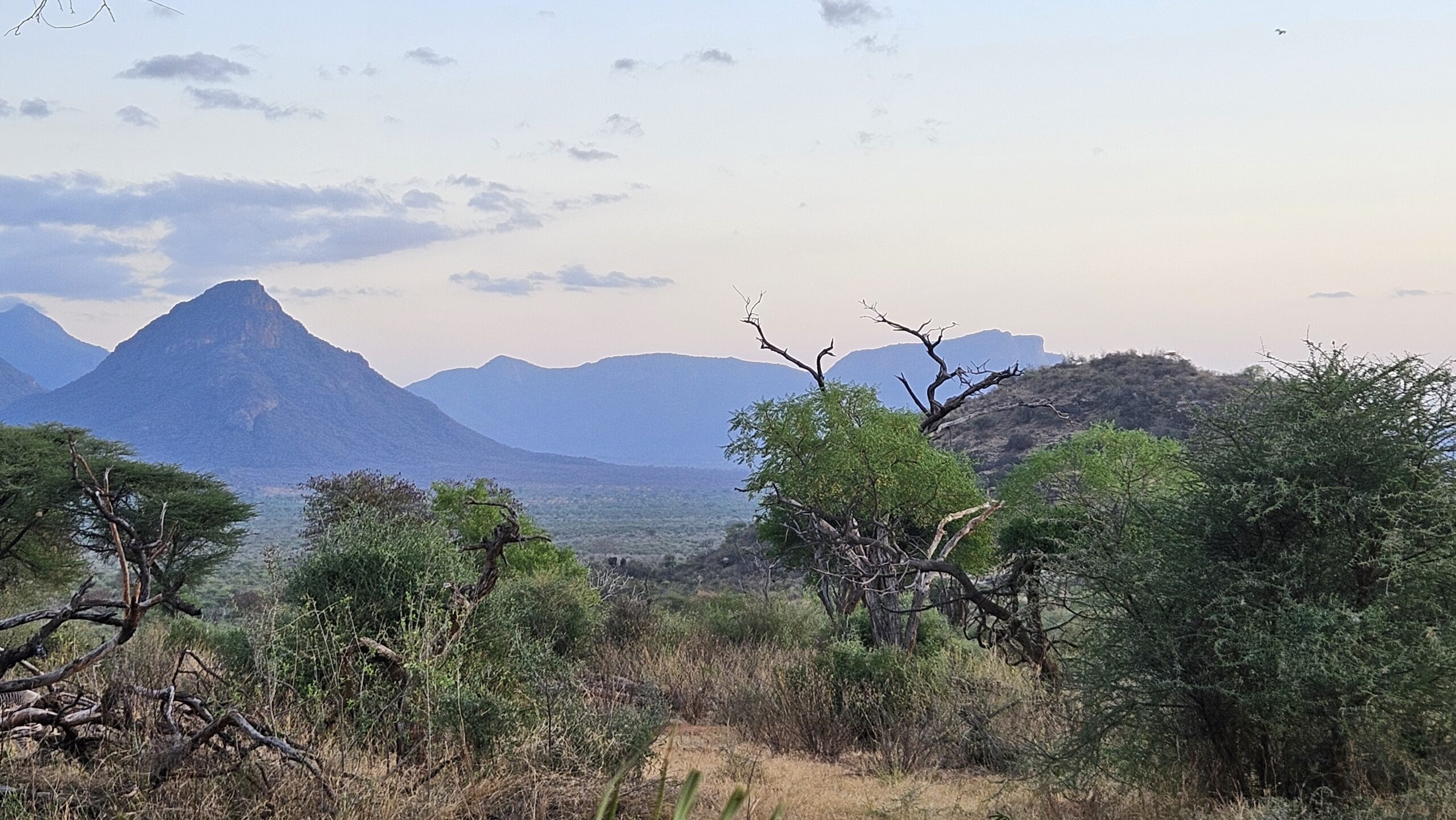
As our work bridges the gap from regenerative farms to five-star kitchens, we’ve come to see food as a powerful, and delicious, form of conservation. We often say that food should be central to any sustainability or wildlife conservation effort – after all, everyone eats, and what ends up on your plate shapes landscapes far beyond your view. This belief led us to partner with lodges like Sarara Camp in Northern Kenya’s Namunyak Conservancy. Sarara is famed for its community-based wildlife conservation, and together with our friends at Give a Scrap (a Nairobi-based zero-waste food collective founded by Tash Straker), we designed a special ‘journey of entanglement’ culinary experience for their guests – Earth.One and to.org and the lodge’s chefs joined us to explore these diverse ingredients and discombobulating concepts.
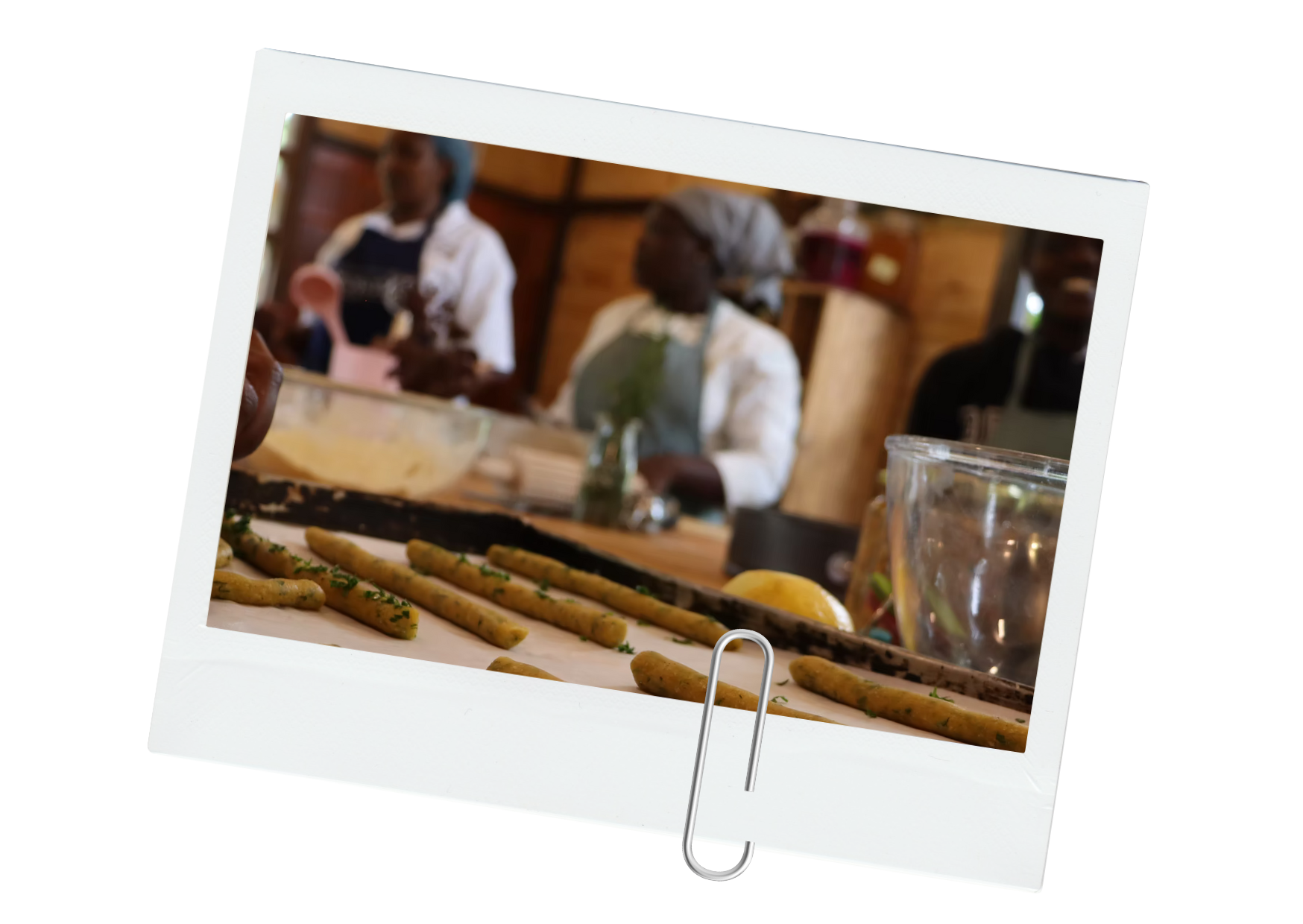
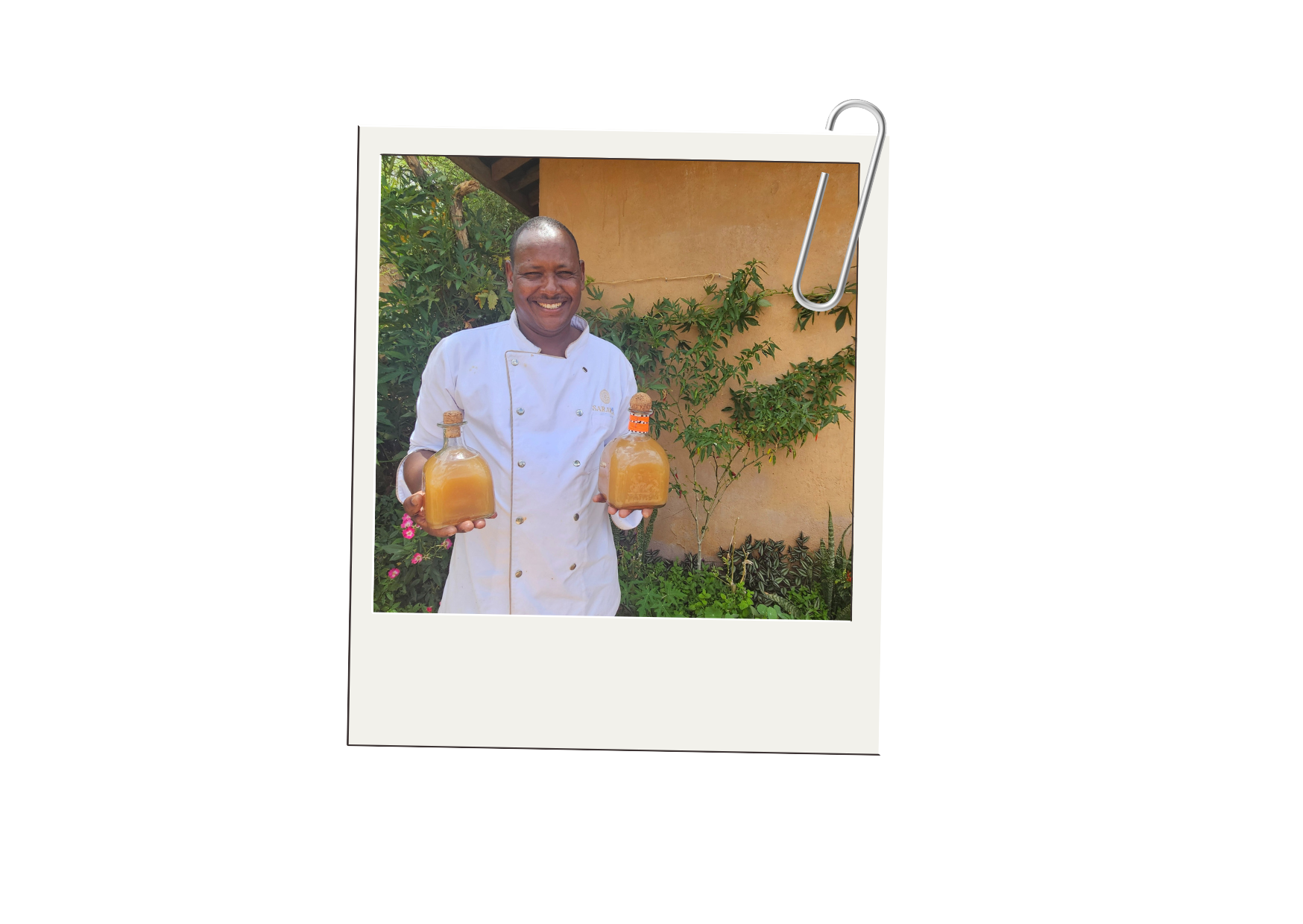
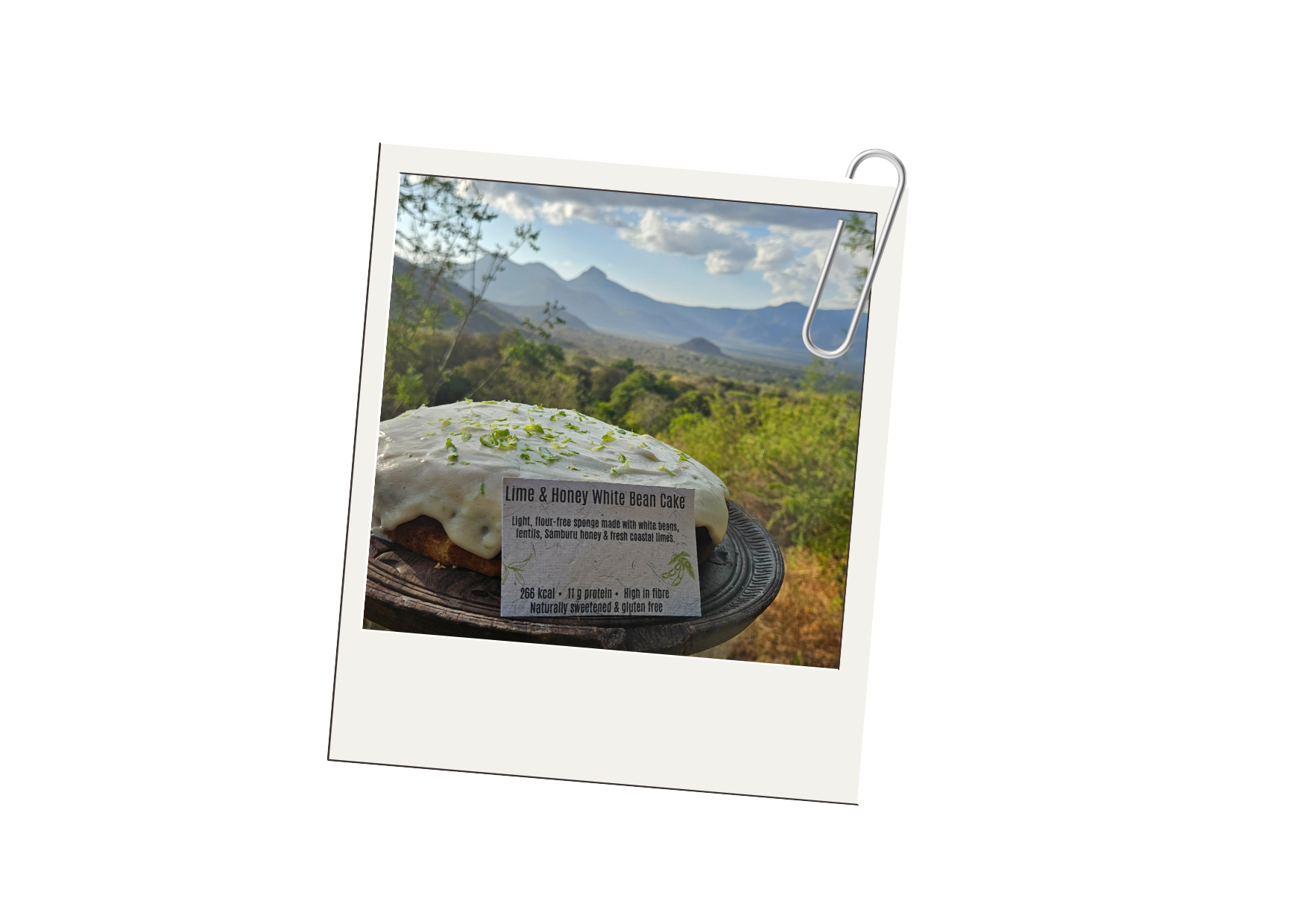
Think “ndugu” cow hump stew, red sorghum bran arancini balls, wild Samburu tulsi and white cowpeas. We also showcase “nose-to-tail” principles to vegetables (every peel, stem, and scrap finds a purpose). Under the stars, we turned yesterday’s stale bread into pangrattato on top of a lemony bean stew with Grove and Meadow fermented macadamia nut parmesan and reimagined wilting greens into vibrant pestos. Not a morsel was wasted. The message to guests was clear: in this sanctuary where elephants roam and leopards lurk, the kitchen too plays a role in protecting life. By choosing diverse, local menus and wasting less, Sarara’s chefs are helping keep the Mathews Range ecosystem intact one meal at a time. Plus at the same time, the food choices and the way we relate to food also plays an important part.
Similar ripples are spreading. We’ve recently trained chefs from The Safari Collection, Governor’s Camp, and Lewa House on menus that honour the land. We encourage each lodge to source from regenerative farmers nearby and to tell the story behind every ingredient to travelers. Guests may arrive expecting the Big Five, but they depart with an added understanding that biodiversity lives on their dinner plates too.
Chefs evolve into guardians of nature in their own right each farm-to-table decision can either erode soil or help it flourish. We choose the latter. By keeping value with growers, supporting them to diversify and farm regeneratively, we see healthier soils, steadier livelihoods, and truly vibrant meals. It’s a virtuous cycle: soil to chef to guest to soil, completing the loop of generosity.
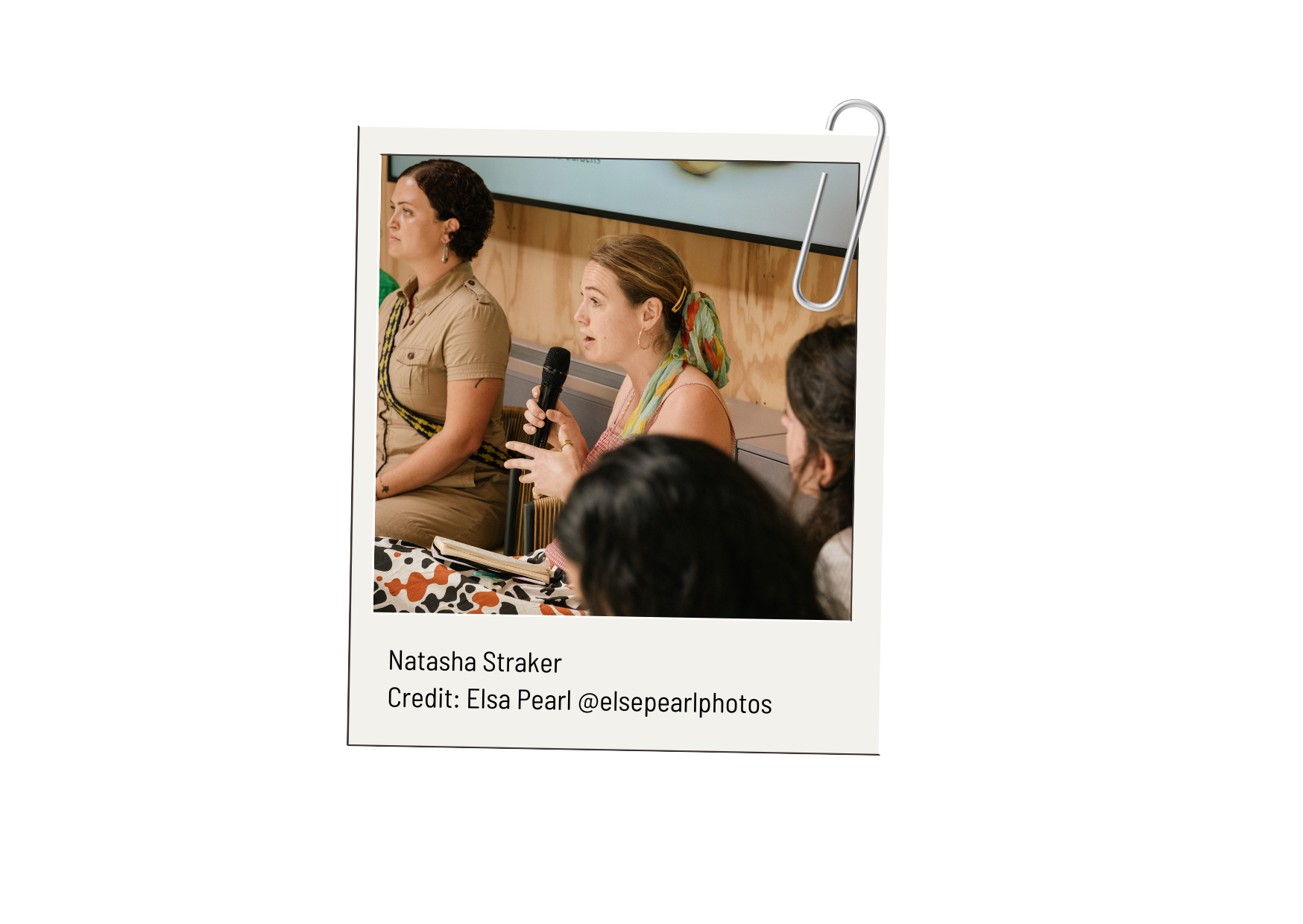
If you’re an influential Kenyan chef (or an aspiring one) moved by this mission, let’s partner more deeply. Come visit our Living Food Campus and see how small acts of courage in the kitchen can ignite big changes in the world beyond. Together, let’s keep cooking up resilience one seed, one meal, one story at a time.
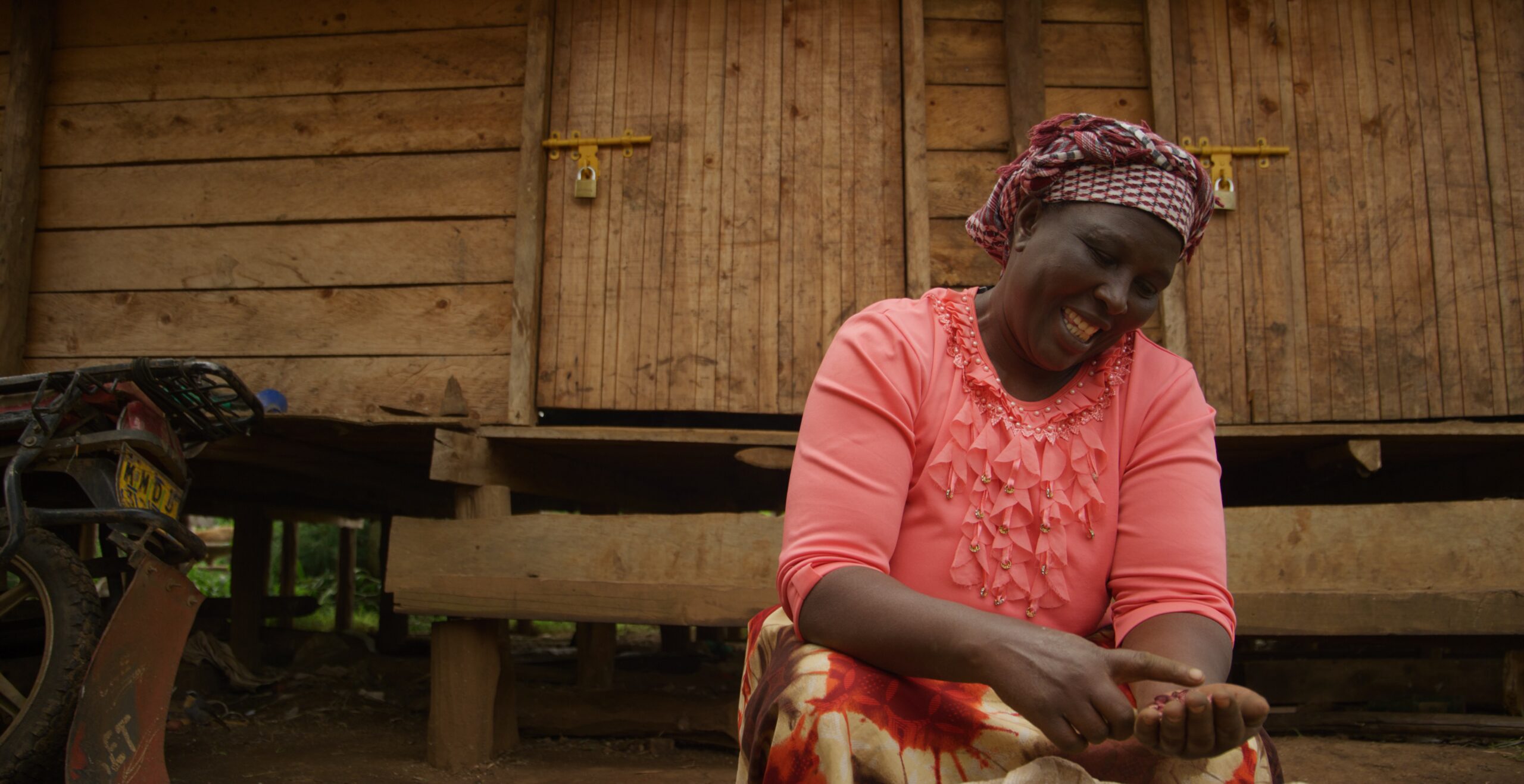
At Sarara Camp in Northern Kenya, chefs teamed up with Grove and Meadow and Give a Scrap to reimagine what sustainable dining looks like. In the heart of the Mathews Range under the day before’s full moon we designed a culinary experience in zero-waste cooking, indigenous, heirloom ingredients and ancient, patient processing techniques.
From creating red sorghum bran arancini balls with plant based fermented cassava mozzarella to turning kitchen scraps into gourmet treats, we proved that small acts in the kitchen can spark big changes for people and the planet.
By choosing resilient local crops and honouring age-old techniques, chefs can protect biodiversity on the plate and beyond. It’s food as a force for good – every meal is a chance to strengthen our food system’s resilience. Check out our menu celebrating #foodbeyondtheplate, where every bite is a vote for a better world. @giveascrap @sarara
Learn more about Grove & Meadow and their approach to empowering chefs as a catalyst for regeneration here.